
How to solve the accuracy problem of precision CNC punching machines?
How to solve the accuracy problem of precision CNC punching machines?

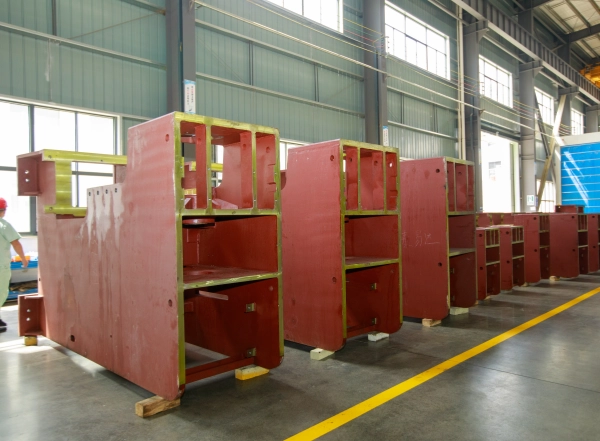
Technical methods and practical strategies for solving the accuracy problems of precision CNC punching machines
The accuracy of precision CNC punching directly determines the quality stability and production efficiency of stamped parts, and its accuracy deviation usually originates from multiple dimensions such as mechanical structure, CNC system, mold state, operation process, and environmental factors. The following systematically explains the core strategy for solving accuracy problems from a technical perspective:
一、 Optimization and maintenance of mechanical structures
Mechanical structure is the fundamental carrier of accuracy, and it is important to focus on rigidity, clearance, and consistency of motion
- Strengthening the rigidity of the bed: Regularly check the tightness of the anchor bolts to avoid deformation of the bed due to looseness; Artificial aging or vibration aging treatment is used for cast iron bed bodies to eliminate internal stresses during casting and reduce long-term deformation.
- Accuracy control of guide rails and sliders: Linear guides need to be cleaned regularly and coated with special lubricating oil to eliminate gaps by adjusting the pre tensioning block or replacing the guide rail pair; The parallelism of the slider can be detected throughout the entire stroke using a dial gauge. If the deviation exceeds 0.02mm/1000mm, the clearance between the guide column and guide sleeve needs to be adjusted or worn parts need to be replaced.
- Accuracy guarantee of transmission mechanism: The pre tightening force of the ball screw needs to be checked regularly. If there is axial clearance, the nut can be adjusted for pre tightening or the screw pair can be replaced; Synchronous belt transmission needs to maintain appropriate tension to avoid slipping or tooth skipping.
二、 Calibration of Numerical Control System and Servo Drive
The numerical control system is the core of precision control and requires optimization of parameters and feedback mechanisms
- Parameter adjustment: Reasonably set the position loop gain, velocity loop gain, and acceleration parameters to balance response speed and stability; Activate the reverse clearance compensation function, measure the clearance value through a laser interferometer and input it into the system to eliminate the reverse clearance error of the screw.
- Encoder calibration: Regularly calibrate the zero point of the servo motor encoder to ensure accurate position feedback; Check the encoder cable connection to avoid positioning deviation caused by signal interference.
- Error compensation: By utilizing the pitch error compensation function of the CNC system, the full stroke error data of the screw is collected through a laser interferometer, a compensation table is generated and imported into the system, effectively reducing the positioning error to within ± 0.01mm.
三、 Life cycle management of mold precision
Mold is a key link that directly affects the accuracy of stamped parts:
- Mold design and manufacturing: When designing, consider the rebound characteristics of the material and set the blade clearance reasonably (such as taking 8% -12% of the material thickness for stainless steel clearance); The manufacturing process strictly controls the dimensional tolerance (± 0.005mm) and surface roughness (Ra ≤ 0.8 μ m) of the convex and concave molds.
- Installation and debugging: Use specialized fixtures to ensure that the coaxiality between the center of the mold and the center of the slider is ≤ 0.01mm; during the trial punching, adjust the edge pressure or air cushion pressure to reduce part rebound and deformation.
- Maintenance and Grinding: Regularly check the wear of the mold cutting edge, and timely grind it when the rounded corner of the cutting edge exceeds 0.1mm; Maintain even gaps between molds to avoid mold deformation caused by uneven loading.
四、 Optimization of operational processes and environment
- Process parameter setting: Adjust the stamping speed according to the material characteristics (such as using low-speed stamping to reduce vibration for thin materials), and the feeding step distance (with an error controlled within ± 0.02mm); For materials with significant rebound, such as aluminum, use step-by-step stamping or add shaping processes.
- Environmental control: The workshop temperature should be maintained at 20 ± 2 ℃, avoiding direct sunlight or air conditioning equipment; The equipment is installed on an independent vibration reduction foundation, and vibration reduction pads are laid to reduce external vibration interference; Regularly clean the equipment to prevent dust from entering the moving parts.
- Operator skills: Strengthen operator training, master CNC system parameter adjustment, error compensation, and mold debugging skills; Establish homework instructions and standardize operational procedures.
五、 Regular testing and calibration
- Daily inspection: Check the lubrication condition of each part of the equipment before starting up every day, and use a dial gauge to check the repeated positioning accuracy of the slider (≤ 0.01mm); Before each batch of production, test punch 3-5 pieces and use a coordinate measuring machine to check key dimensions.
- Regular calibration: Every six months, a laser interferometer is used to comprehensively calibrate the positioning accuracy and repeatability accuracy of the machine tool; Conduct precision testing on the mold once a year and replace worn parts.
summary
The precision assurance of precision CNC punching machines is a systematic engineering that requires comprehensive control from multiple dimensions such as mechanical structure, CNC system, mold, process, and environment. Through regular maintenance, precise calibration, and process optimization, the dimensional error of stamped parts can be effectively controlled within ± 0.02mm, ensuring production stability and product quality.


