What Information Is Needed to Select a Stamping Press?
What Information Is Needed to Select a Stamping Press?

Selecting the right stamping press involves much more than choosing a machine with sufficient tonnage. The press must also match the workpiece, material, die, production speed, automation system and factory conditions.
Providing complete production information at the beginning helps the press manufacturer recommend a suitable machine, reduce technical risks and avoid unnecessary investment. This guide explains the key information buyers should prepare before requesting a quotation.
1. Part Drawing and Stamping Process
A part drawing is one of the most important documents for press selection. It helps the equipment supplier understand the part size, geometry, tolerances and forming difficulty.
The following information should be included whenever possible:
- Finished part drawing with dimensions and tolerances
- 2D or 3D drawing of the workpiece
- Required stamping process, such as blanking, piercing, bending, forming or drawing
- Number and size of holes
- Critical dimensional or surface requirements
- Current production process, if the part is already being manufactured
It is also important to explain whether the part will be produced with a single-operation die, progressive die, transfer die or compound die. Different die types may require different press strokes, speeds, bolster dimensions and feeding systems.
2. Material Type and Thickness
The type and thickness of the material directly affect the required pressing force. Buyers should provide the exact material grade instead of only stating that the material is “steel.”
Useful material information includes:
- Material type and grade
- Tensile or shear strength, if available
- Minimum and maximum material thickness
- Sheet or coil width
- Surface coating or finish
- Whether the material is supplied as individual sheets or coils
For example, stainless steel, carbon steel, aluminium and high-strength steel can require different press capacities even when the parts have similar dimensions.
3. Required Press Capacity
Press tonnage should be calculated according to the actual stamping operation. Important factors include material strength, material thickness, cutting perimeter and the severity of the forming or drawing process.
The selected press should provide sufficient capacity throughout the working stroke—not only at the bottom dead centre. Load distribution and possible off-centre loading should also be considered.
For this reason, buyers should provide the part and die information to the press manufacturer for technical confirmation rather than selecting a machine only by comparing nominal tonnage.
4. Die Dimensions and Operating Data
The press must be physically compatible with the die. A machine with sufficient tonnage may still be unsuitable if its bolster, shut height or stroke does not match the tooling.
Please provide the following die information:
- Die length, width and total height
- Upper and lower die weight
- Required shut height
- Required working stroke
- Feed height
- Slide adjustment requirement
- Bolster dimensions
- Die clamping method
- Required die-changing method
If a new die has not yet been manufactured, preliminary tooling drawings or estimated dimensions can still help the press supplier prepare an initial recommendation.
5. Production Speed and Output Target
Production speed affects both machine selection and automation design. Buyers should define the desired output instead of simply asking for a “high-speed press.”
Useful production information includes:
- Required strokes per minute
- Parts produced per stroke
- Target hourly, daily or annual output
- Number of working shifts
- Single-stroke or continuous operation
- Expected die change frequency
- Required changeover time
The highest possible speed is not always the best choice. The correct production speed should match the material feeding system, die performance, part discharge method and quality requirements.
6. Press Frame and Drive Configuration
The press structure should be selected according to the die size, required rigidity and load distribution.
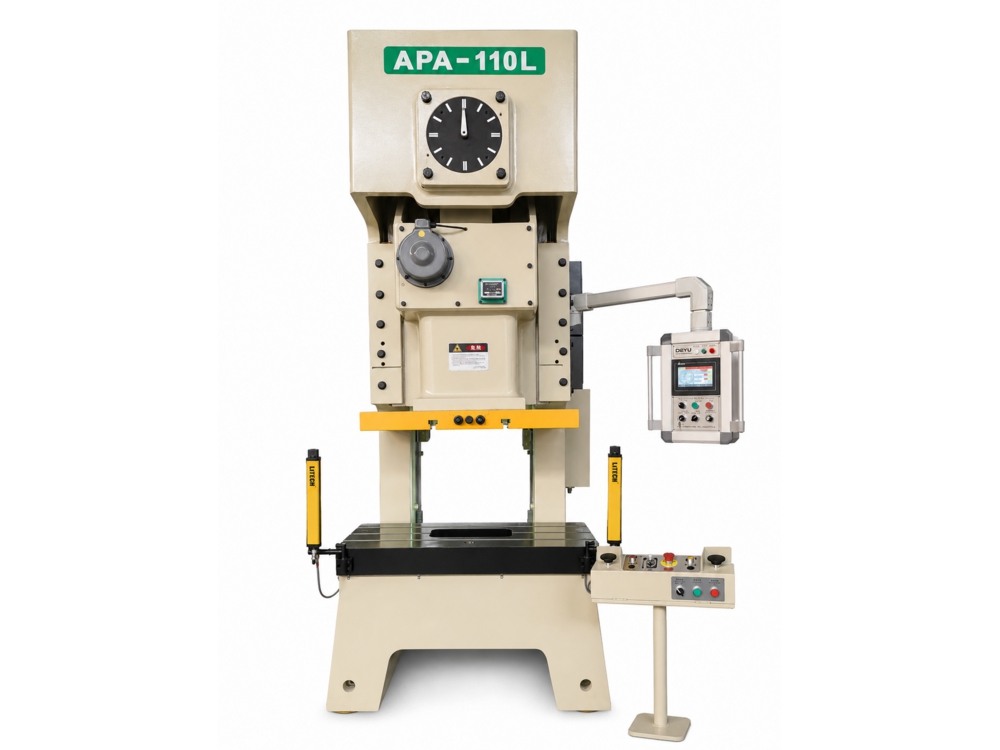
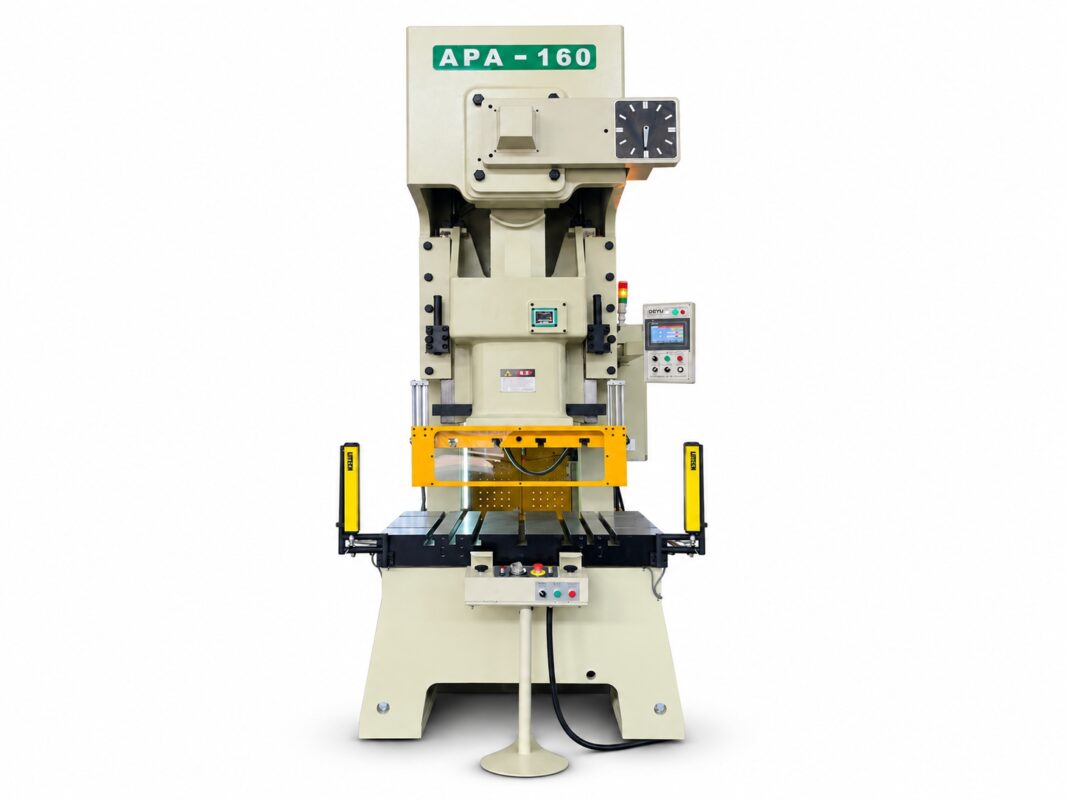
A C-frame press provides convenient access to the working area and is commonly used for general stamping operations. A straight-side press normally offers higher structural rigidity and is better suited to larger dies, wider workpieces or heavier stamping loads.
Single-crank presses are often suitable for relatively compact working areas. Double-crank presses provide a wider working area and improved load distribution for large dies and wide workpieces.
The final configuration should be confirmed based on the actual part, process and tooling requirements.
7. Feeding and Automation Requirements
A stamping press is often only one part of a complete production line. If automated production is required, buyers should describe how the raw material enters the press and how the finished parts leave it.
For coil-fed production, please provide:
- Coil width and thickness
- Maximum coil weight
- Coil inner and outer diameter
- Feed pitch
- Feeding direction
- Required feeding accuracy
- Required uncoiler, straightener and feeder
- Lubrication requirement
The project may also require a transfer system, robot, safety light curtain, die sensor, scrap conveyor or finished-part collection system. Confirming these requirements early helps avoid interface problems between the press and auxiliary equipment.
8. Factory and Utility Conditions
The machine must also match the installation conditions at the buyer’s factory. Before ordering, confirm:
- Local voltage, frequency and phase
- Available compressed-air pressure
- Workshop height and entrance dimensions
- Floor load capacity
- Foundation requirements
- Available installation and maintenance space
- Local electrical and machine-safety standards
- Destination country and delivery port
Photos and layout drawings of the intended installation area can help the supplier evaluate transportation, positioning and maintenance access.
Stamping Press Selection Checklist
Before requesting a quotation, prepare as much of the following information as possible:
- Part drawing and finished-part dimensions
- Stamping process and die type
- Material grade, thickness and width
- Estimated or calculated press tonnage
- Die dimensions, weight and shut height
- Required stroke and strokes per minute
- Target production output
- Sheet-fed or coil-fed production
- Feeding and automation requirements
- Factory voltage and installation conditions
Incomplete information does not necessarily prevent an initial recommendation. However, the more accurate the project information is, the more reliable the proposed machine configuration will be.
How DEYU Can Help
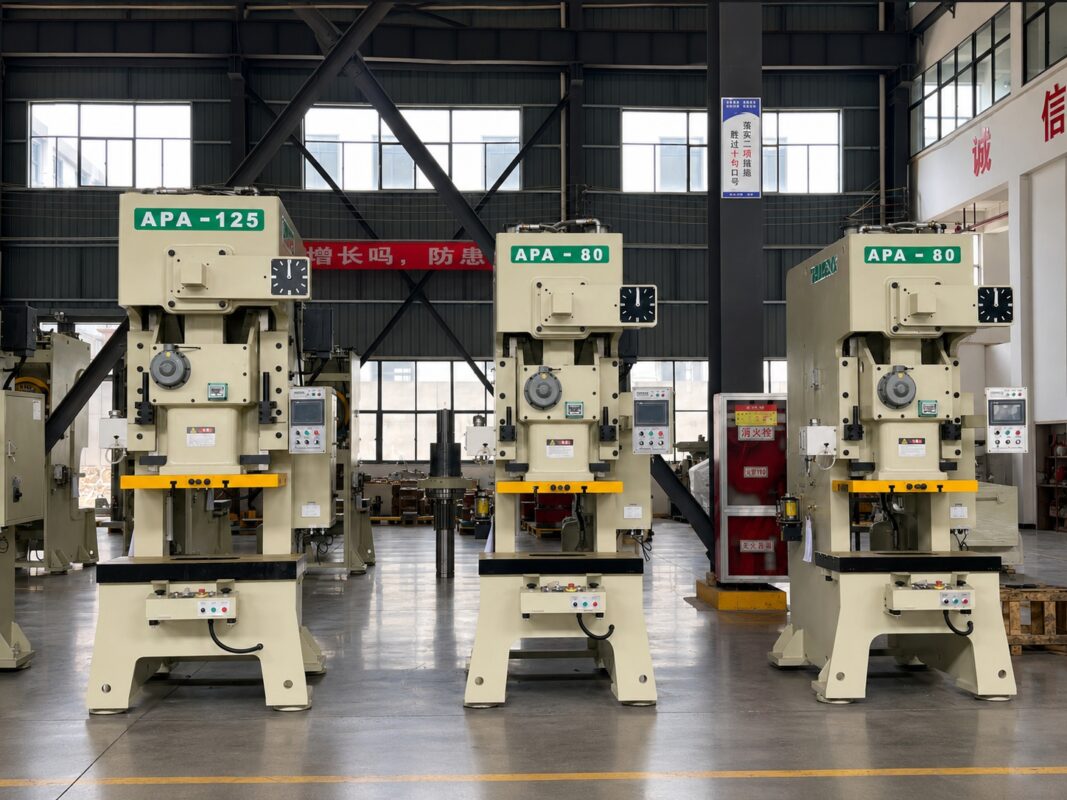
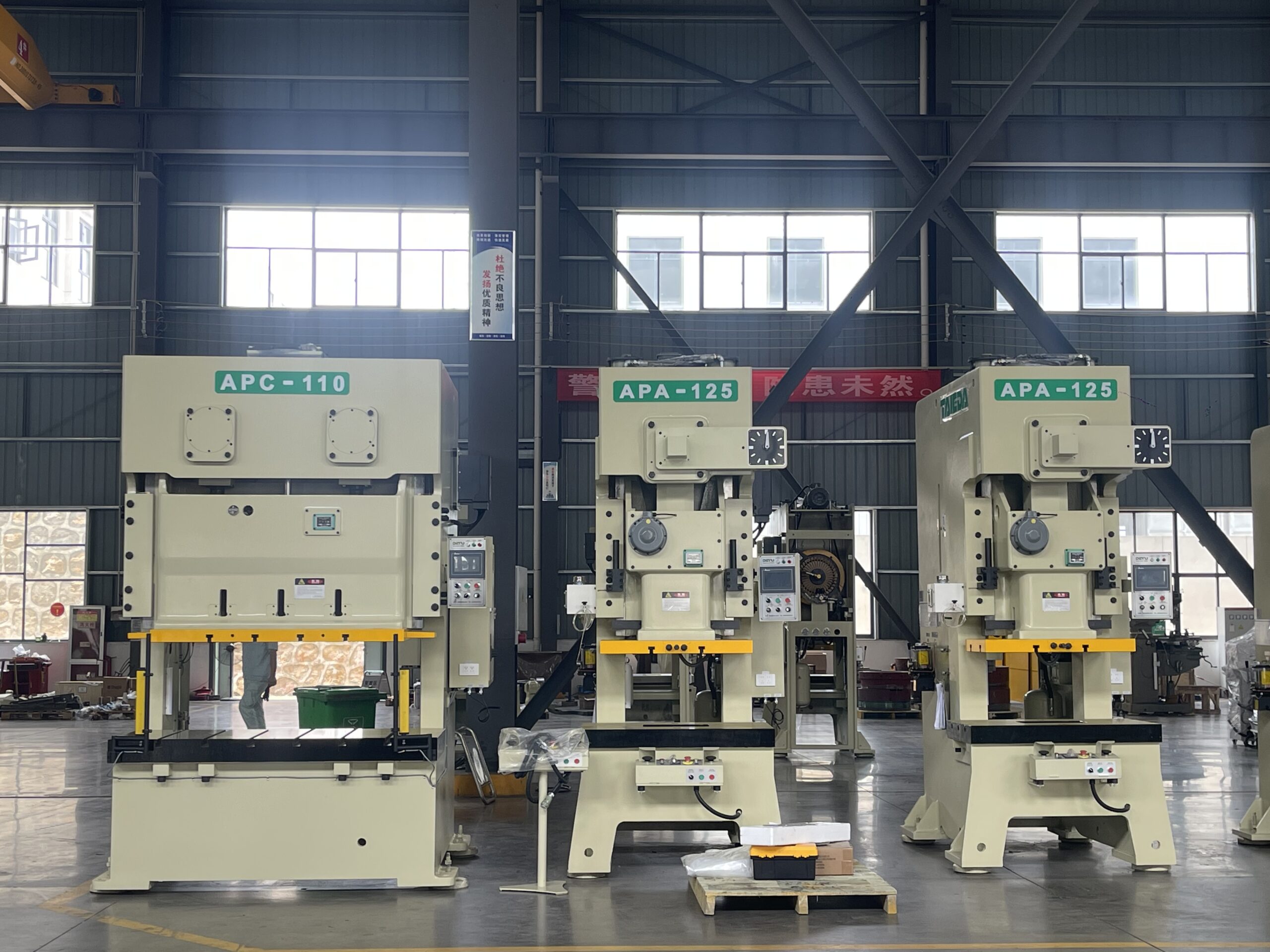
DEYU provides precision stamping presses and supporting automation solutions for different metal-forming applications. Our available product configurations include C-frame, semi-closed, closed-type single-crank, double-crank and high-speed precision presses.
Send us your part drawing, material information, die dimensions and production requirements. Our team will review the application and recommend a suitable press configuration.
Contact DEYU to discuss your stamping project and request a technical proposal.