
What documents are required for purchasing precision CNC punching machines?
What documents are required for purchasing precision CNC punching machines?

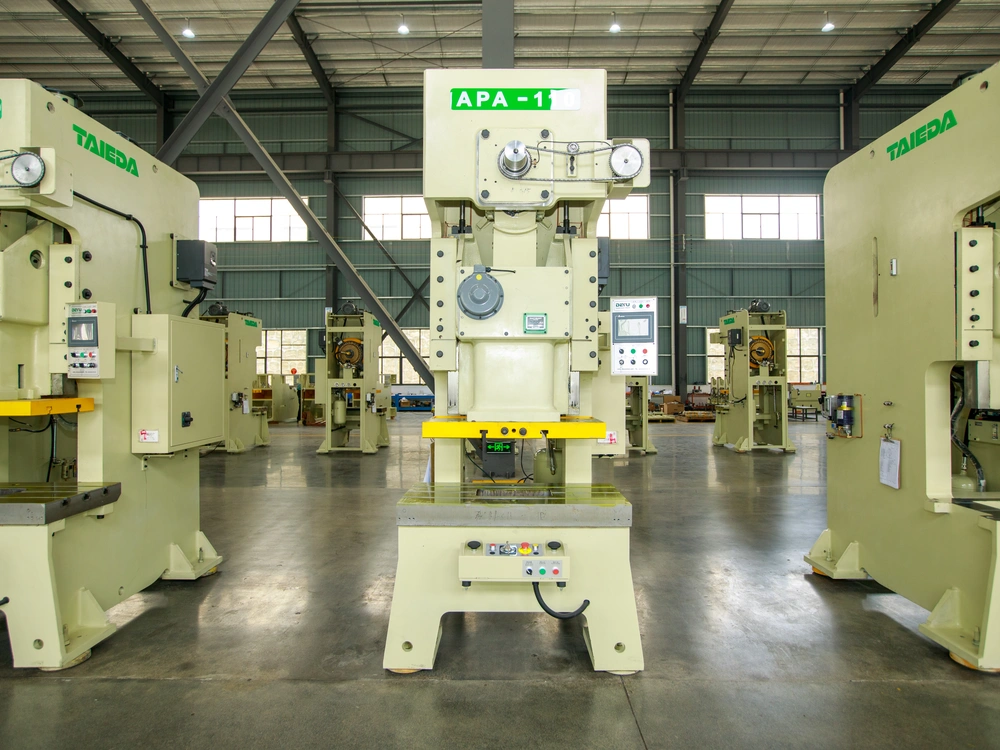
Complete analysis of required identification documents for purchasing precision CNC punching machines
As a key equipment in the industrial manufacturing field, the selection process of precision CNC punching machines not only requires attention to technical parameters and performance, but also needs to ensure equipment compliance, quality reliability, and subsequent service guarantee through complete documentation. From the dimensions of supplier qualifications, equipment itself, procurement transactions, installation acceptance, after-sales support, and special requirements for imported equipment, the following are the key documents that need to be checked when purchasing:
一、 Supplier qualification certificates
- Business License
It is necessary to verify the business scope of the supplier’s business license (including relevant categories such as “CNC punching machine production” or “mechanical equipment sales”), registered capital, establishment period, and business status (whether it is “in existence” or “in operation”), to ensure that the supplier has legal business qualifications.
- Production License
If the equipment falls within the scope of national mandatory production license (such as some high-precision CNC equipment), an Industrial Product Production License must be provided to prove that the supplier has production capacity that meets national standards.
- Quality Management System Certification
Priority should be given to suppliers who hold ISO9001 quality management system certification, which reflects the standardization level of their production processes and reduces equipment quality risks.
- Industry specific certification
Certification from the China Machine Tool and Tool Industry Association in the machine tool industry or qualifications in specific fields (such as military and aerospace supporting qualifications) can serve as supplementary proof of the supplier’s technical strength.
二、 Technical and quality certificates of the equipment itself
- Product Qualification Certificate
Issued by the manufacturer, it clearly specifies the equipment model, serial number, production date, inspection conclusion, and other information. It is the core proof that the equipment meets the design standards and needs to be stamped with the manufacturer’s quality inspection seal.
- Technical specifications
Detailed specification of the core parameters of the equipment (such as punching force, positioning accuracy, repeat positioning accuracy, worktable size, mold changing time, etc.), configuration list (such as CNC system brand, servo motor model, hydraulic system specifications), and performance indicators are important basis for equipment acceptance.
- Third party accuracy testing report
Issued by authoritative metrology institutions (such as the National Machine Tool Quality Supervision and Inspection Center), testing is carried out on key indicators such as positioning accuracy, repeat positioning accuracy, and stamping accuracy of equipment, and the data must comply with national standards such as GB/T 18400.1-2010.
- Safety and environmental certification
-3C certification: If the equipment includes an electrical control system and belongs to the national 3C mandatory certification catalog, a 3C certificate must be provided to ensure electrical safety.
-Safety protection certification: proof of compliance with GB/T 15760 “General Technical Conditions for Safety Protection of Metal Cutting Machine Tools”, verifying whether the protective devices of the equipment (such as safety doors and emergency stop buttons) meet the standards.
-Environmental testing report: including indicators such as noise and oil fume emissions during equipment operation, which must comply with environmental requirements such as the “Industrial Enterprise Boundary Environmental Noise Emission Standards”.
- Certificate (optional)
If the equipment adopts unique technologies such as high-speed mold changing and intelligent stamping algorithms, relevant certificates may be required to demonstrate the technological innovation of the equipment.
三、 Documents related to procurement transactions
- Procurement contract
Clear core terms such as equipment model, quantity, price, delivery period, payment method, and breach of contract liability require both parties to stamp and confirm, which is the legal basis for the transaction.
- Technical Agreement
As an attachment to the contract, refine the technical requirements of the equipment (such as customized functions, accessory brands, software versions), acceptance criteria (such as accuracy testing methods, trial operation duration), and training content to avoid disputes in the later stage.
- Formal quotation
Include details such as equipment unit price, accessory cost, installation and commissioning fee, transportation fee, etc., which should be consistent with the contract amount to ensure cost transparency.
四、 Installation acceptance and training materials
- Installation and commissioning report
Issued by the supplier’s technical personnel, it records the equipment installation process (such as foundation requirements, electrical connections, hydraulic system debugging) and trial operation results, and requires the buyer’s signature to confirm that the equipment is initially operating normally.
- Acceptance report
Both parties shall jointly participate in the performance testing (such as continuous stamping stability, mold replacement efficiency) and precision re inspection of the equipment in accordance with the technical agreement. After confirming that it meets the standards, a signature shall be signed, which marks the formal delivery of the equipment.
- Operation training records
Record the training content (such as equipment operation, daily maintenance, troubleshooting) and assessment results of the supplier for the buyer’s operators, to ensure that personnel can safely and standardly use the equipment.
五、 After sales guarantee documents
- After sales Service Commitment Letter
Clearly define the warranty period (usually 1-2 years), maintenance response time (such as remote support within 24 hours and on-site service within 48 hours), spare parts supply cycle and charging standards to ensure the later operation and maintenance of the equipment.
- Spare parts list and certificate of conformity
Provide a list of vulnerable parts (such as molds, seals, sensors) and corresponding certificates of conformity to ensure that the quality of spare parts matches the equipment.
六、 Special certificates for imported equipment
If choosing an imported precision CNC punch press, additional verification is required:
- Customs declaration: It proves that the equipment is legally imported, including information such as the name, model, country of origin, and dutiable value of the goods.
- Certificate of Origin: Confirm the country of production of the equipment for enjoying tariff benefits or verifying the qualification of origin.
- Inspection certificate: issued by the entry-exit inspection and quarantine agency, verifying that the equipment meets China’s technical standards and safety requirements.
- Import License (if applicable): For high-end equipment with partial import restrictions, an import license issued by the Ministry of Commerce or relevant departments is required.
Conclusion
Complete identification information is the “safety lock” for selecting precision CNC punching machines, which not only verifies equipment quality and compliance, but also provides a basis for subsequent installation, use, maintenance, and dispute resolution. When making a purchase, it is necessary to check the above information one by one to avoid the equipment being unable to be put into use or facing compliance risks due to missing documents, and to ensure that the purchased equipment meets production needs and operates stably for a long time.


