Metal stamping is one of the manufacturing processes used to produce components for new energy vehicles. Depending on the part design and production requirements, applications may include mounting brackets, support plates, retaining clips and certain electrical connecting parts. The suitability of a stamping process and press configuration depends on the material, geometry, tooling and required output.
1. Battery Mounting Brackets and Support Plates
Battery assemblies can incorporate metal brackets, retaining plates and supporting components. Where these parts are designed for sheet metal stamping, production may involve blanking, punching mounting holes and bending flanges.
For battery mounting bracket stamping, important drawing requirements can include hole position, bend angle, flatness and the relationship between mounting surfaces. These requirements help determine the die design and sequence of operations.
When evaluating a press for battery mounting brackets, review:
Material grade and thickness.
Part dimensions and bend geometry.
Required punching and forming force.
Die dimensions, weight and working height.
Production volume and material feeding method.
Small brackets and support plates should be evaluated separately from complete battery trays or large enclosures. Their tooling, forming depth and equipment requirements can differ substantially.
2. EV Equipment Brackets and Mounting Parts
Electrical equipment, cooling assemblies and other vehicle systems use mounting and supporting components. Depending on the design, stamped parts may include flat mounting plates, bent brackets and formed reinforcing features.
Producing these parts can require several operations. A blank may first be cut from sheet or strip, followed by hole punching and bending. Some designs can combine operations in a progressive die.
A stamping press for EV brackets must accommodate the complete tooling arrangement. Small finished parts can still require a relatively large die when several stations are used.
The load distribution also matters. If punching and forming occur at different positions within the tool, the press supplier should review the resulting off-center loads alongside the total force requirement.
3. Metal Clips, Retainers and Connecting Plates
Clips, retainers and connecting plates may be suitable for repeated punching and bending operations from strip material. The production method depends on the geometry, material properties and expected output.
For these components, tooling and material handling should be planned together. Feed pitch, strip guidance, scrap removal and finished-part discharge can affect whether production runs consistently.
When assessing a mechanical press for EV metal parts, consider the complete production cycle. The required output depends on the number of parts made per stroke, operating speed, material changes and die maintenance.
4. Busbars and Electrical Interconnects
Some copper and aluminum busbars and electrical interconnects are manufactured using punching and forming operations. These components require a different process review from structural steel brackets.
Relevant requirements may include:
Hole position and dimensional tolerances.
Edge condition and allowable burr height.
Surface protection during feeding and handling.
Bend geometry and material condition.
Inspection and any required finishing operations.
Burr control depends on the tooling, cutting clearance, material and maintenance as well as machine performance. It should not be treated as a result guaranteed by press precision alone.
For busbar stamping applications, the equipment recommendation should follow a review of the actual drawing and manufacturing process. A general tonnage range is not sufficient to select the machine.
5. Press Selection Factors by Application
Application
Potential operations
Key selection factors
Battery mounting brackets
Blanking, punching and bending
Material thickness, bend geometry, die size and required force
Equipment mounting plates
Blanking, hole punching and forming
Part dimensions, flatness, hole locations and load distribution
Clips and retainers
Punching and bending
Material properties, die layout, feed pitch and output target
Connecting plates
Blanking, punching and forming
Cutting perimeter, forming requirements and tooling dimensions
Busbars and interconnects
Punching and bending
Material condition, burr limits, surface quality and tolerances
These applications provide starting points for an equipment discussion. Final press selection requires the component and tooling specifications.
Press Capacity and Available Energy
Nominal tonnage alone does not determine whether a mechanical press is suitable. The required force must remain within the machine’s allowable capacity at the relevant position in the stroke.
Available energy and the proposed operating speed must also match the process. Tooling with several simultaneous operations needs to be assessed as a complete load.
Slide, Bolster and Die Dimensions
Check the die footprint, weight, clamping arrangement and support requirements against the press specifications.
The slide and bolster must accommodate the tool, while the working area must provide suitable access for feeding, setup and part removal.
Stroke, Die Height and Slide Adjustment
Stroke length must suit the operation and provide the clearance needed for material feeding and finished-part removal.
Die height and slide adjustment must match the tooling. These dimensions should be checked before choosing a machine based on capacity or speed.
Frame Configuration and Load Distribution
C-frame and straight-side describe the machine frame. Single-crank and double-crank describe aspects of the drive arrangement.
Both should be considered when reviewing tooling size, access and load distribution. A suitable configuration depends on the application and the machine’s specified operating limits.
6. Progressive Die Stamping and Coli Feeding for EV Parts
Progressive die stamping can combine several operations in one tool. The strip advances by a defined pitch between strokes, allowing different operations to take place at successive stations.
For suitable EV brackets, clips and connecting parts, this approach can support repeated production from coil. Its suitability depends on the component design, tooling investment and required production volume.
A coil feeding line for EV stamping may include a decoiler, straightener and feeder. These units need to match the material and coordinate with the press and die.
Before specifying the feeding equipment, confirm:
Material grade, width and thickness.
Coil dimensions and weight.
Required feed pitch and accuracy.
Target operating speed.
Surface protection requirements.
Scrap handling and finished-part removal.
Specify the production target in finished parts per minute or per shift, alongside the proposed press speed. This gives suppliers a clearer basis for reviewing the complete process.
7. DEYU Mechanical Presses for Application Review
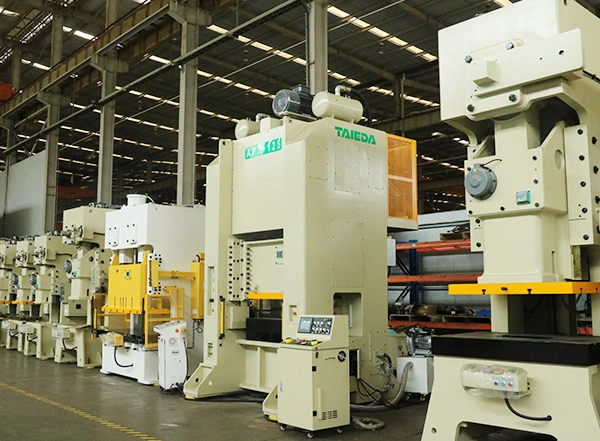
DEYU manufactures mechanical presses and supplies feeders, straighteners and decoilers for stamping production.
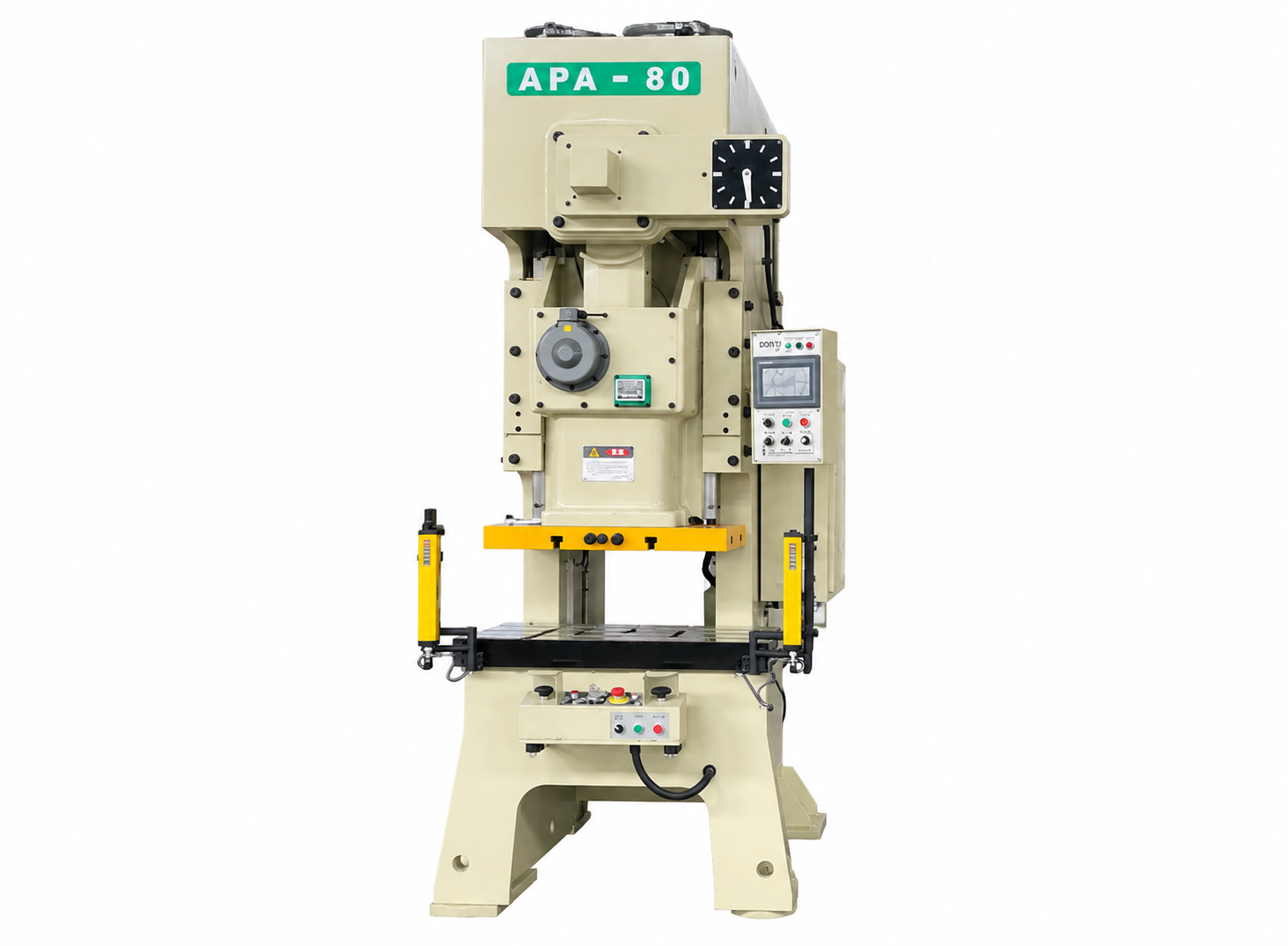
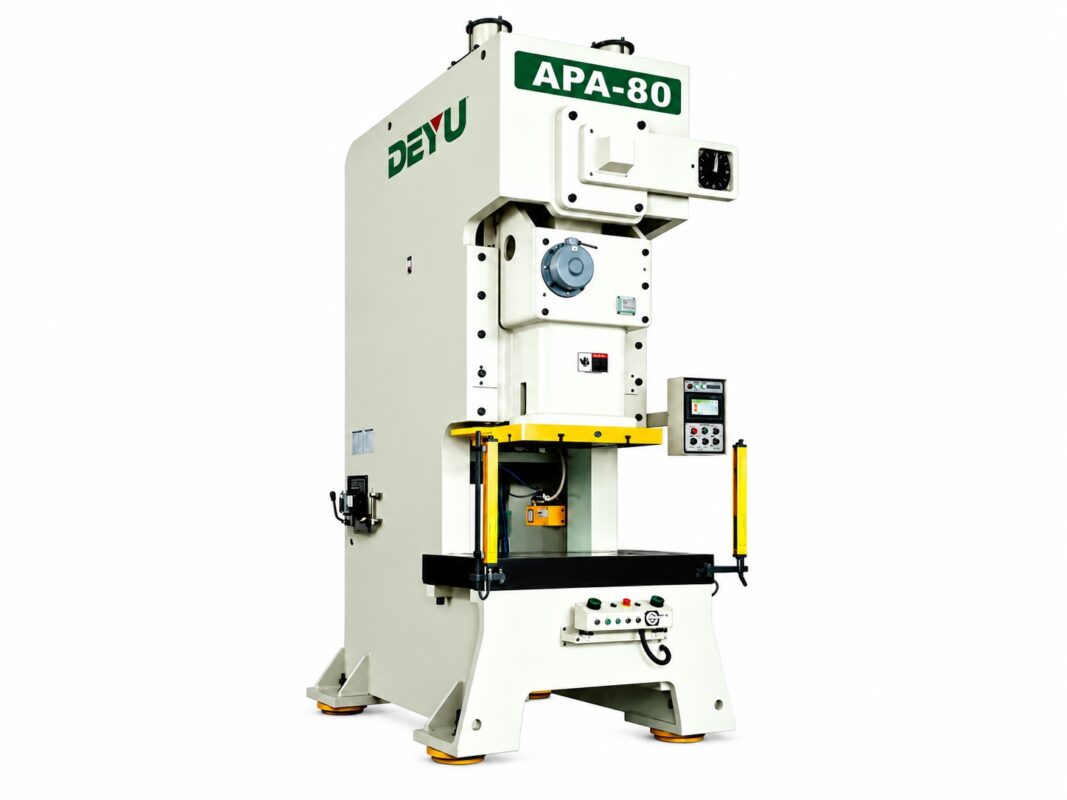
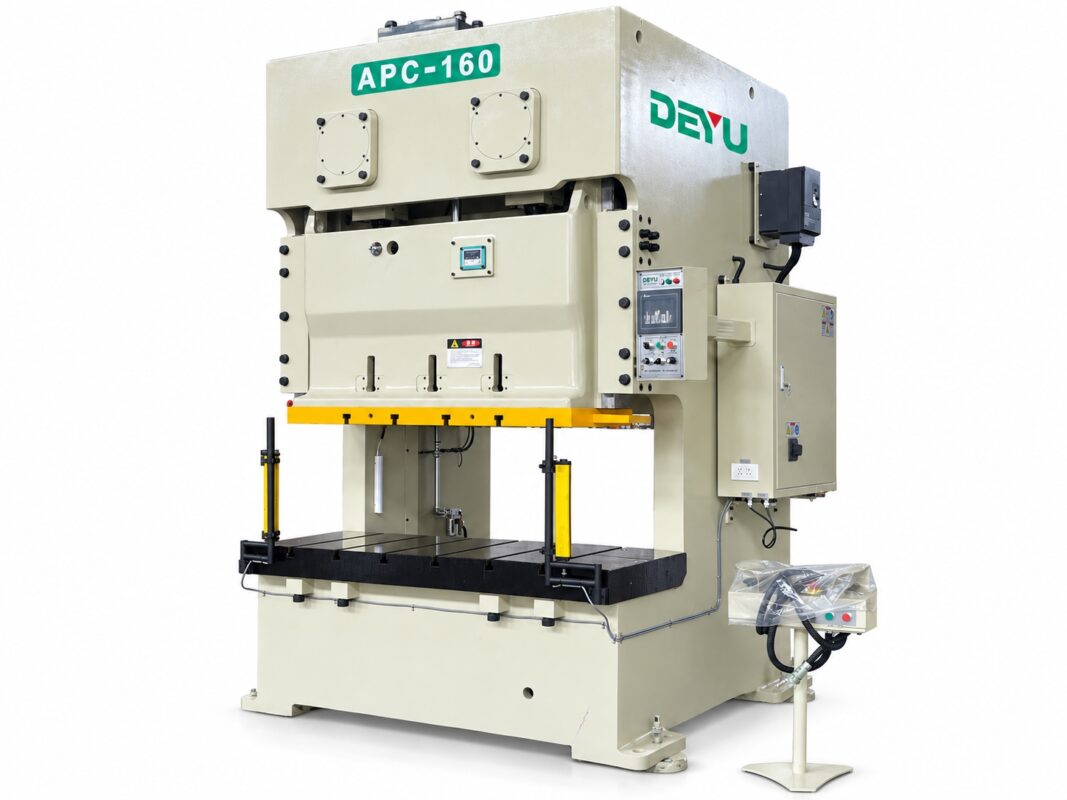
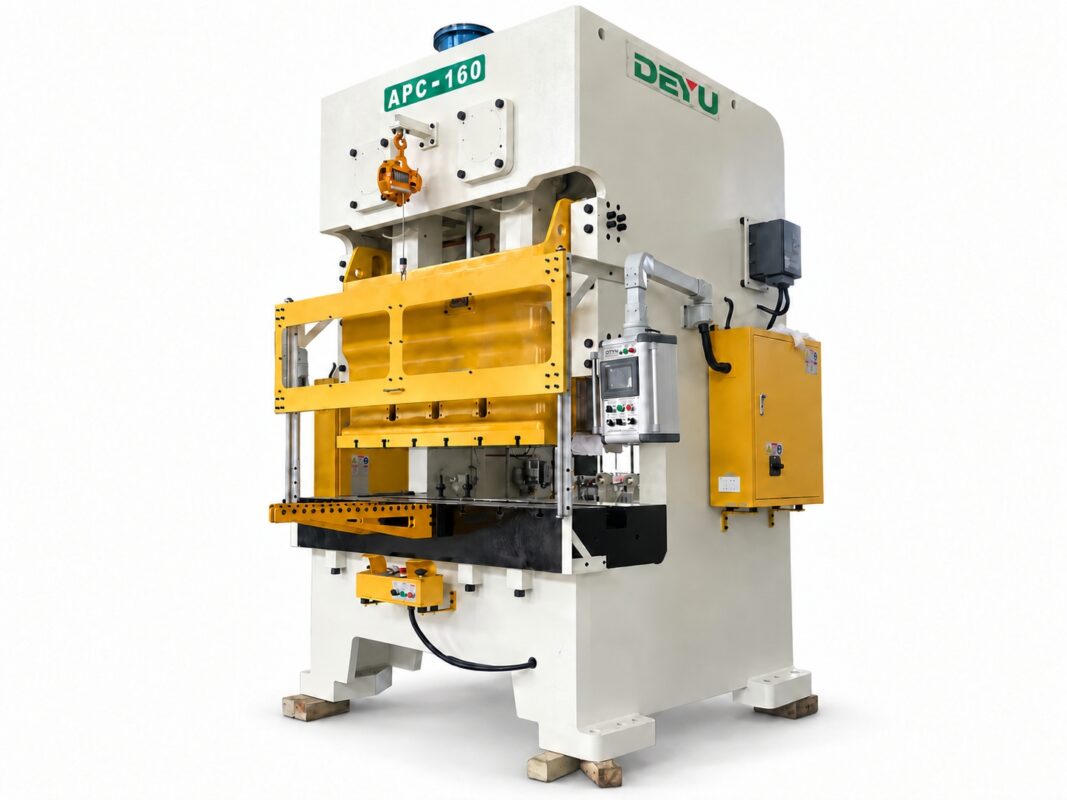
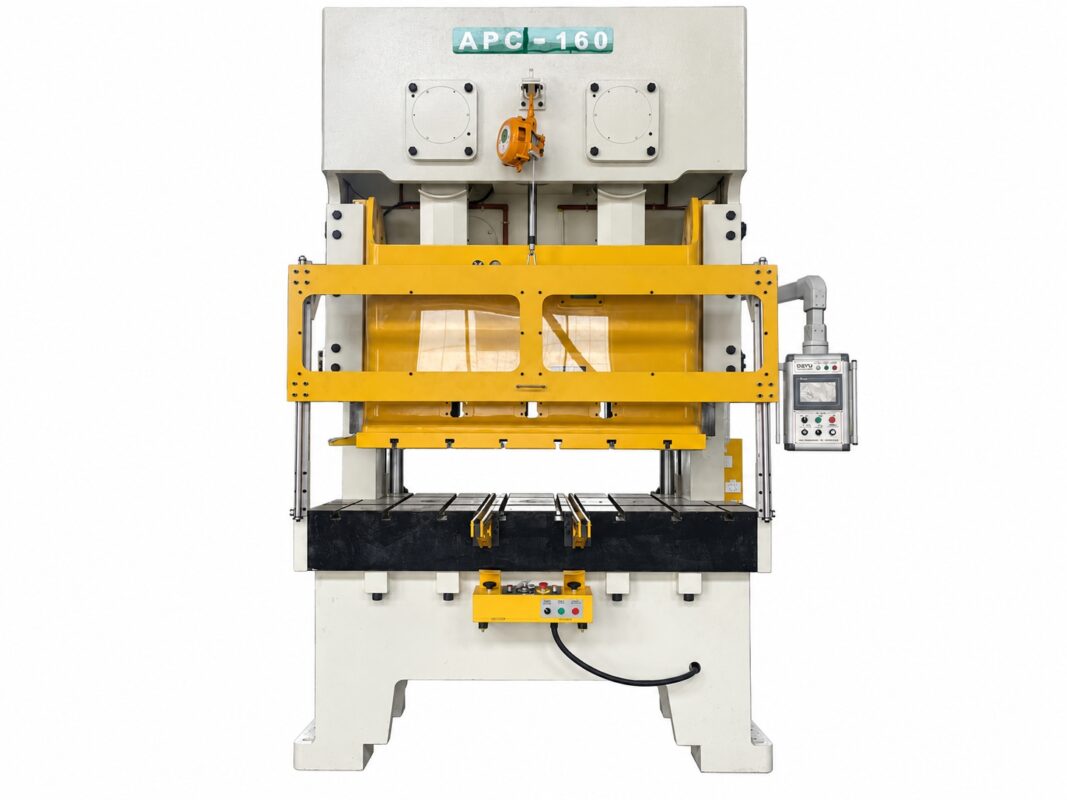
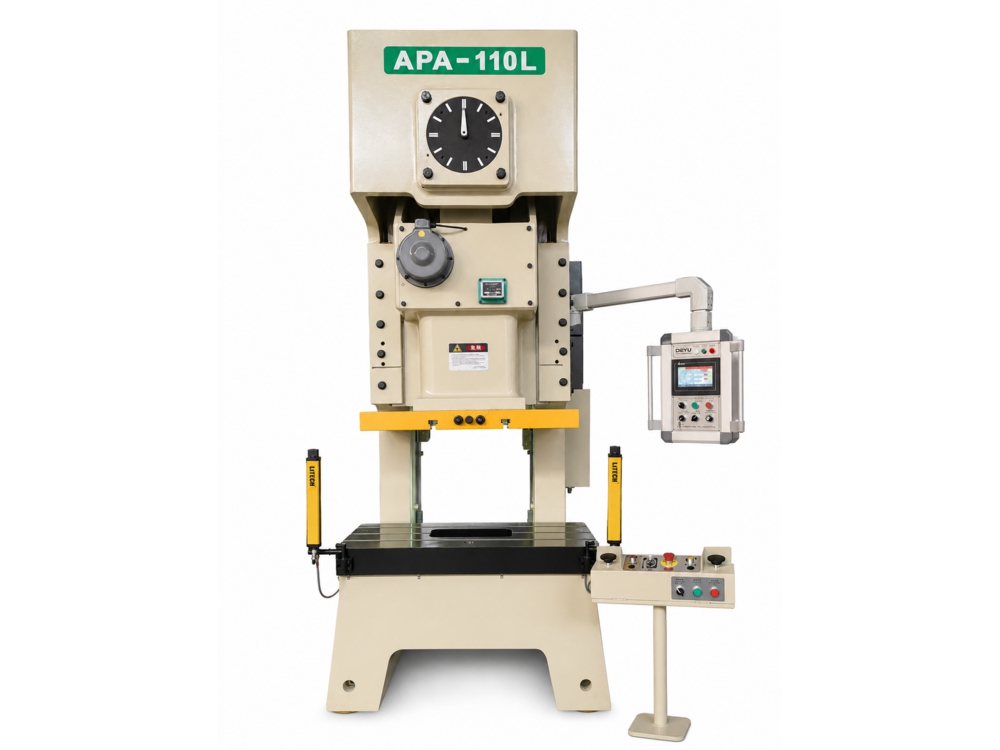
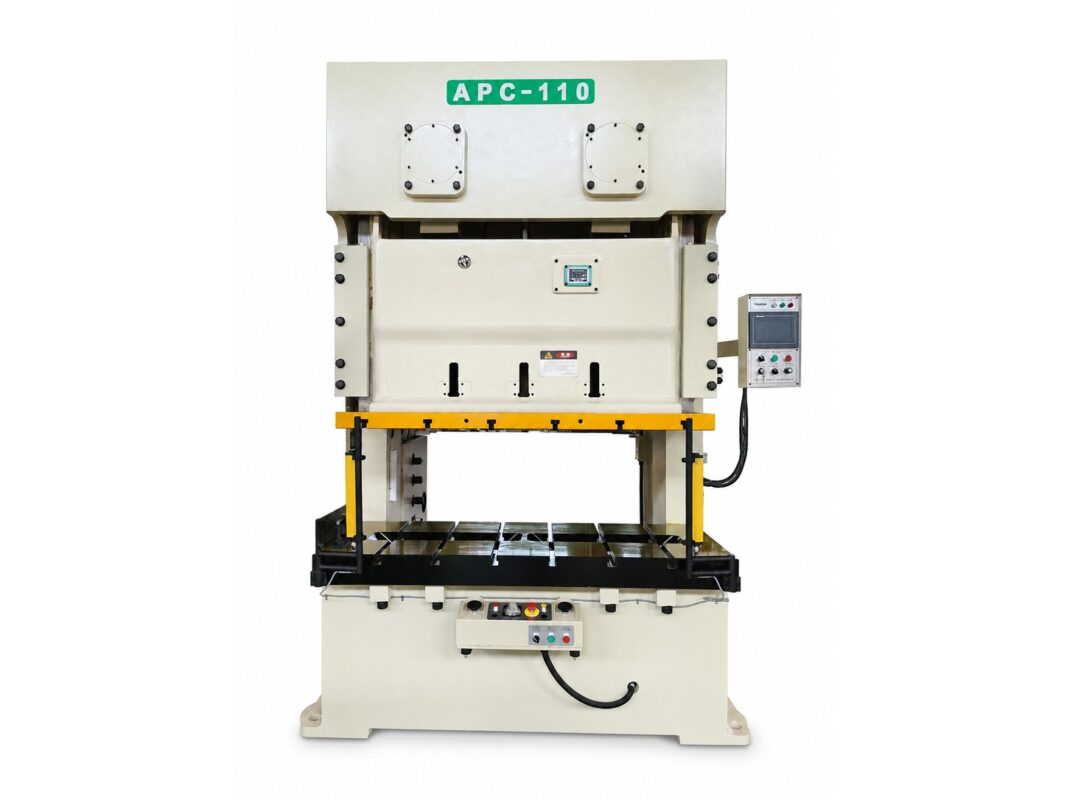
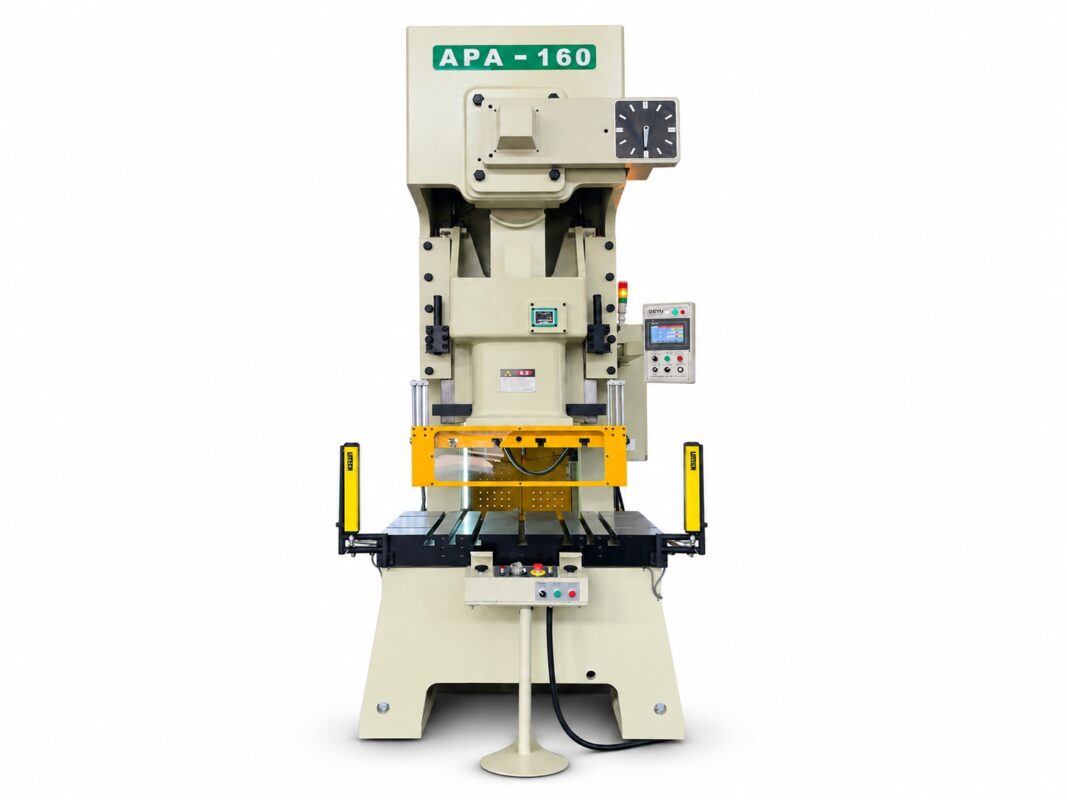
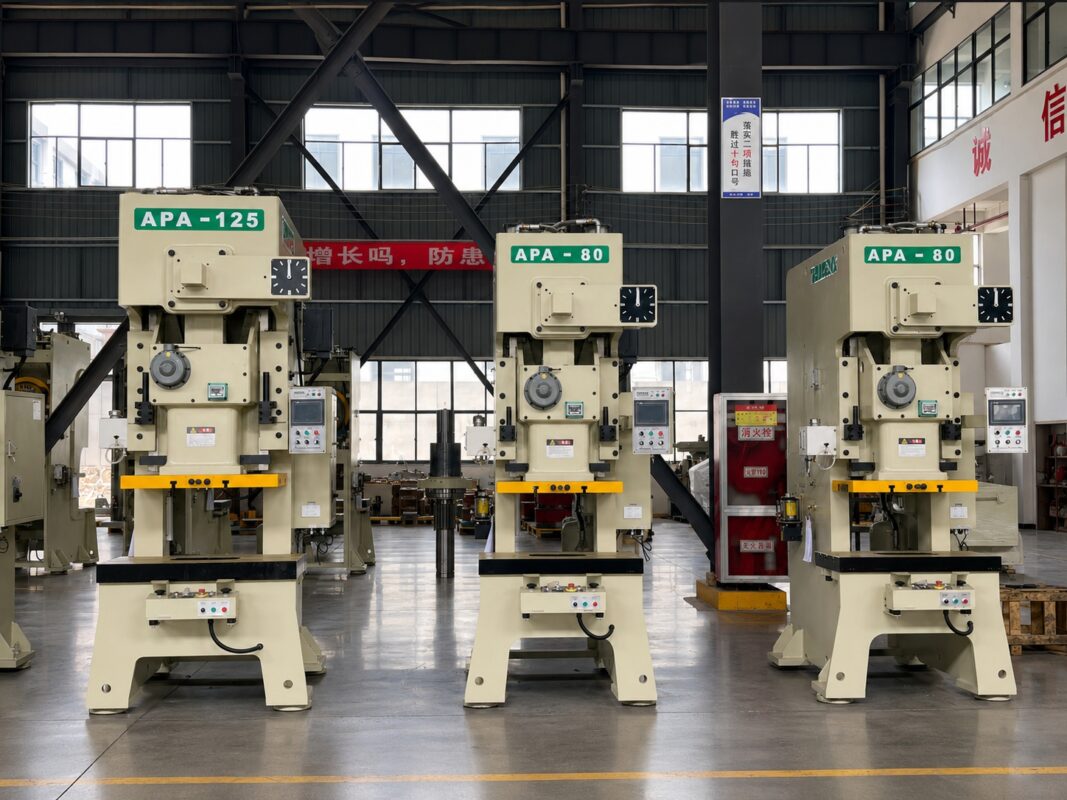
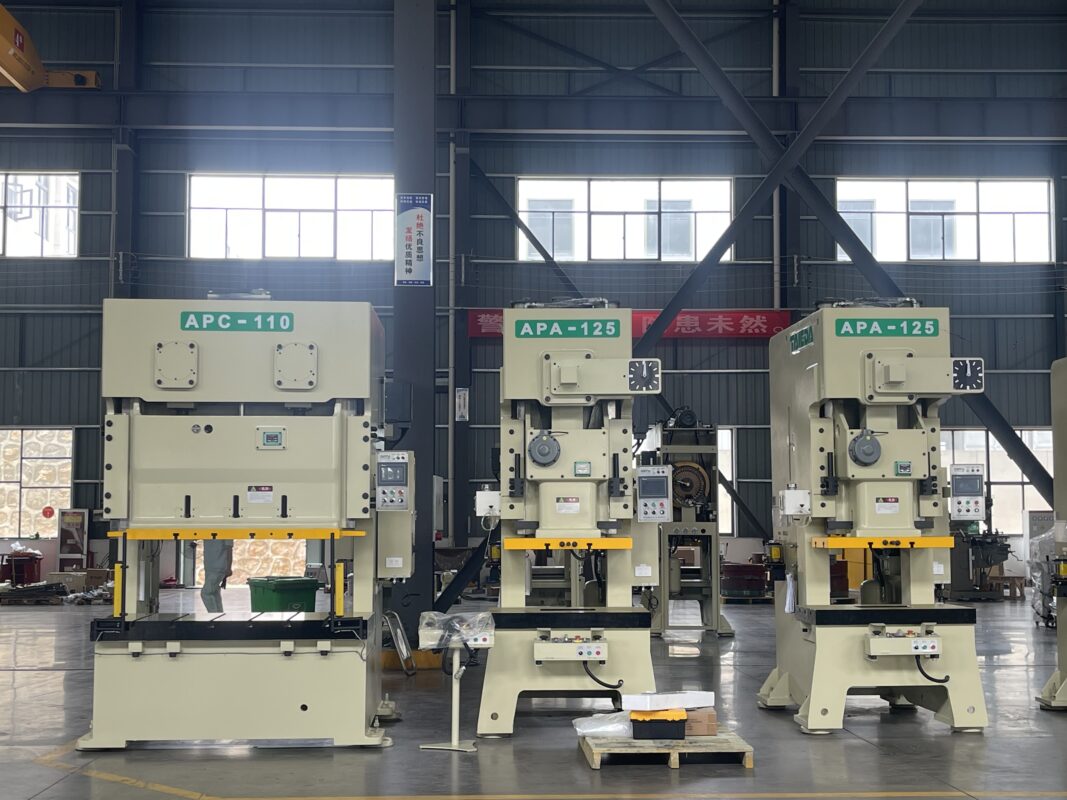
The APA Series features a C-frame single-crank configuration. The APC Series features a C-frame double-crank configuration with a wider working area. These configurations provide different starting points for evaluating die dimensions, tooling access and production requirements.
For new energy vehicle parts, the recommended machine should be selected from the actual component and tooling information. Material handling and feeding requirements should be included in the same review.
Frequently Asked Questions
Can a C-frame press produce EV brackets?
A C-frame press may be suitable for certain brackets, mounting plates and connecting parts. Suitability depends on the required force, die dimensions, load distribution and production process.
What tonnage is needed fot battery mounting bracket stamping?
There is no single tonnage for all battery mounting brackets. Material strength, thickness, cutting perimeter, bend geometry and the operations performed in each stroke affect the required force.
Can one mechanical press produce different NEV components?
A press can use different tools when each application remains within the machine’s specifications. Die dimensions, weight, capacity, stroke, die height and feeding compatibility should be checked for every tool.
Can the same equipment produce motor laminations or large battery trays?
These applications require separate technical reviews. Motor lamination stamping and large battery tray forming can have substantially different speed, tooling, working area and forming requirements from bracket production.
Discuss Your Stamping Application with DEYU
Planning production for battery mounting brackets, equipment supports or other stamped metal components?
Send us your part drawing, material grade and thickness, available die specifications and required production output. DEYU can review this information with you to assess a suitable mechanical press and feeding configuration.
Understand how a mechanical press works, from the flywheel and crank mechanism to the slide and die. Learn its main components, stamping uses and what to check before selecting a machine.
Understand the main stamping press specifications and what to check when comparing machines, from tonnage and stroke length to speed, bolster size and die height.
A two-point press drives the slide at two positions and provides a wider working area for wider dies. Learn when the DEYU APC Series may suit your stamping job.
Progressive die stamping uses one die with several stations to produce metal parts continuously. Learn how the process works and how to choose a suitable stamping press.
Not all presses are the same. Compare mechanical vs. hydraulic on force delivery, speed, stroke flexibility, and typical uses—so you can match the machine to your parts.
Understand the key differences between single-crank press machines and double-crank press machines, including the driving structure, working area, load distribution, mold size, and applicable stamping applications.
Compare C-frame and straight-side presses by frame rigidity, die access, working area, tonnage, die size and suitable applications to choose the right press.
Learn what information buyers should prepare before selecting a stamping press, including part drawings, material, die data, production speed and automation requirements.
Door type closed single point precision punching machine is a widely used metal processing equipment, mainly used for stamping metal sheets, suitable for m...
Door type closed single point precision punching machine is a common metal processing equipment that emits certain noise during operation. In order to redu...
How to determine the normal operation of precision CNC punching machinesPrecision CNC punching machine is the core equipment in the field of metal shee...