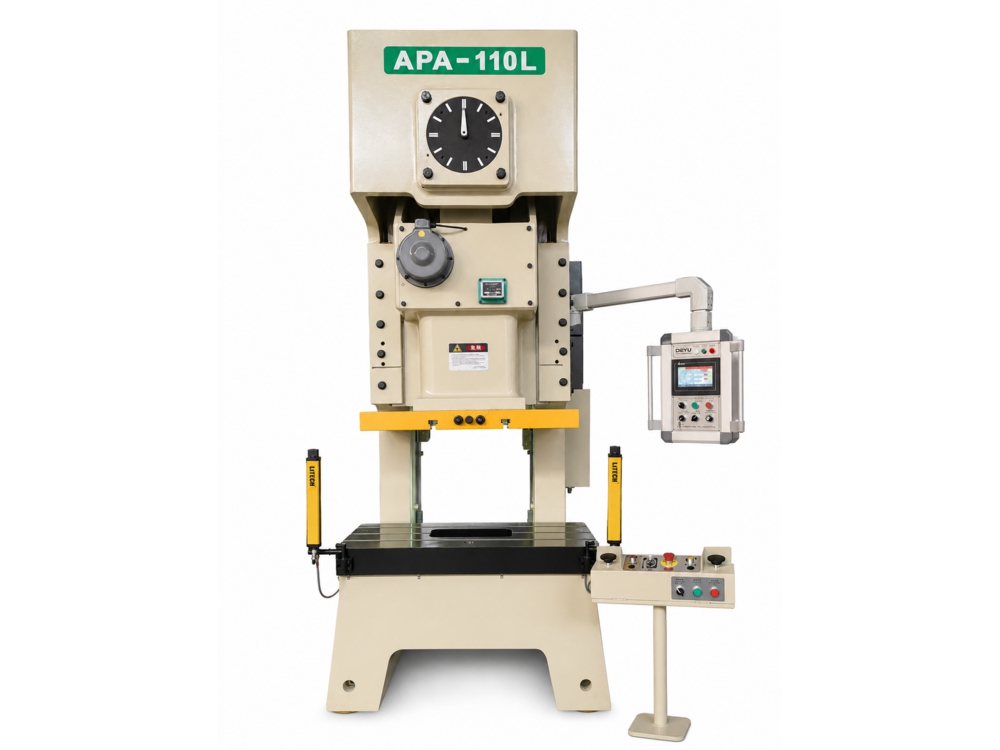
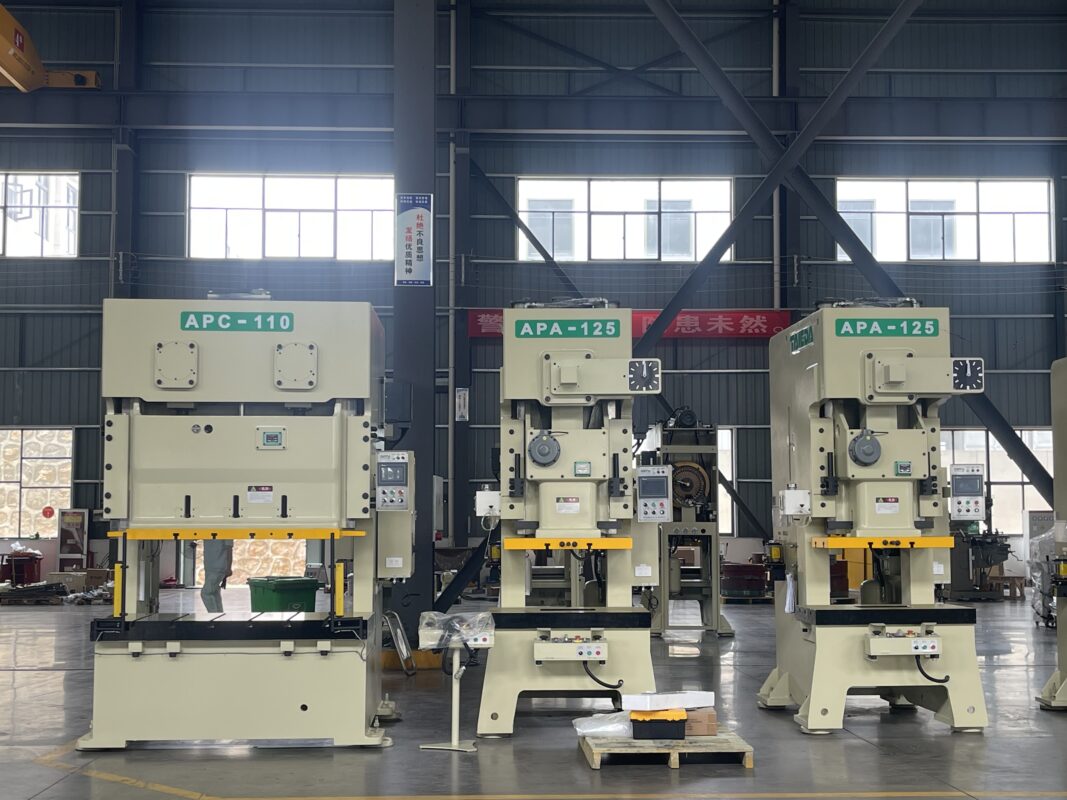
A mechanical press uses a mechanical drive to move a slide up and down. With a die installed, it can punch, cut, bend or form metal into the required shape.
If you are choosing a press for your production, it helps to understand how the machine moves, what the die does and which specifications you need to check. Here, we explain the basic working principle of a conventional flywheel-driven crank press.
1. What Is a Mechanical Press?
A mechanical press converts rotary motion into the straight movement of a slide. The upper die is attached to the slide, while the lower die is mounted on the press bed or bolster.
As the slide moves down, the die works on the material. The slide then moves back up, opening the die for the next cycle.
You can use the same press for different parts by changing the die, provided the tooling and stamping requirements fit the machine. The die determines the part shape; the press supplies the movement and force.
2. How Does a Mechanical Press Work?
In a conventional mechanical power press, the motor drives a flywheel that stores rotational energy. When the clutch engages, the drive transmits this energy to the crank mechanism.
The crankshaft and connecting rod convert rotation into the up-and-down movement of the slide. This brings the upper and lower dies together to complete the stamping operation.
The basic sequence is:
The motor drives the flywheel.
The clutch engages the press drive.
The crank mechanism moves the slide downward.
The die punches, cuts, bends or forms the material.
The slide returns upward and the die opens.
For coil-fed production, a feeder advances the strip during the available feeding window. Its movement must be coordinated with the press and die so that the material reaches the correct position before the next operation.
3. What Are the Main Components?
You do not need to know every internal part to compare machines. These are the main components you will see in a mechanical press description.
Component
What it does
Frame
Supports the machine and carries the stamping load
Motor and flywheel
Supply and store energy for the press cycle
Clutch and brake
Engage the drive and control stopping
Crankshaft and connecting rod
Convert rotation into slide movement
Slide
Carries the upper die
Bolster
Supports the lower die
Control system
Controls operating modes and coordinates connected equipment
When you read a specification table, keep the bolster size and slide size separate. They describe different mounting surfaces, and both must be checked against your die.
4. What Can You Use a Mechanical Press For?
Mechanical presses are used for punching, blanking, bending and forming sheet metal. Typical parts include brackets, clips, electrical components and appliance parts.
For example, punching makes a hole in the material. Blanking cuts out the required part outline. Bending changes the angle of the material, while forming creates a required shape or feature.
With a suitable progressive die, several operations can take place at different stations during the same press stroke. The strip moves forward between strokes, passing through the stations until the finished part is separated.
The press, die and feeding equipment must match the job. Part shape, material thickness and production quantity all affect whether this arrangement is suitable for your production.
5. Which Mechanical Press Fits Your Die?
Start with your die dimensions and stamping requirements. A machine with enough nominal tonnage may still have the wrong table size, stroke or die height.
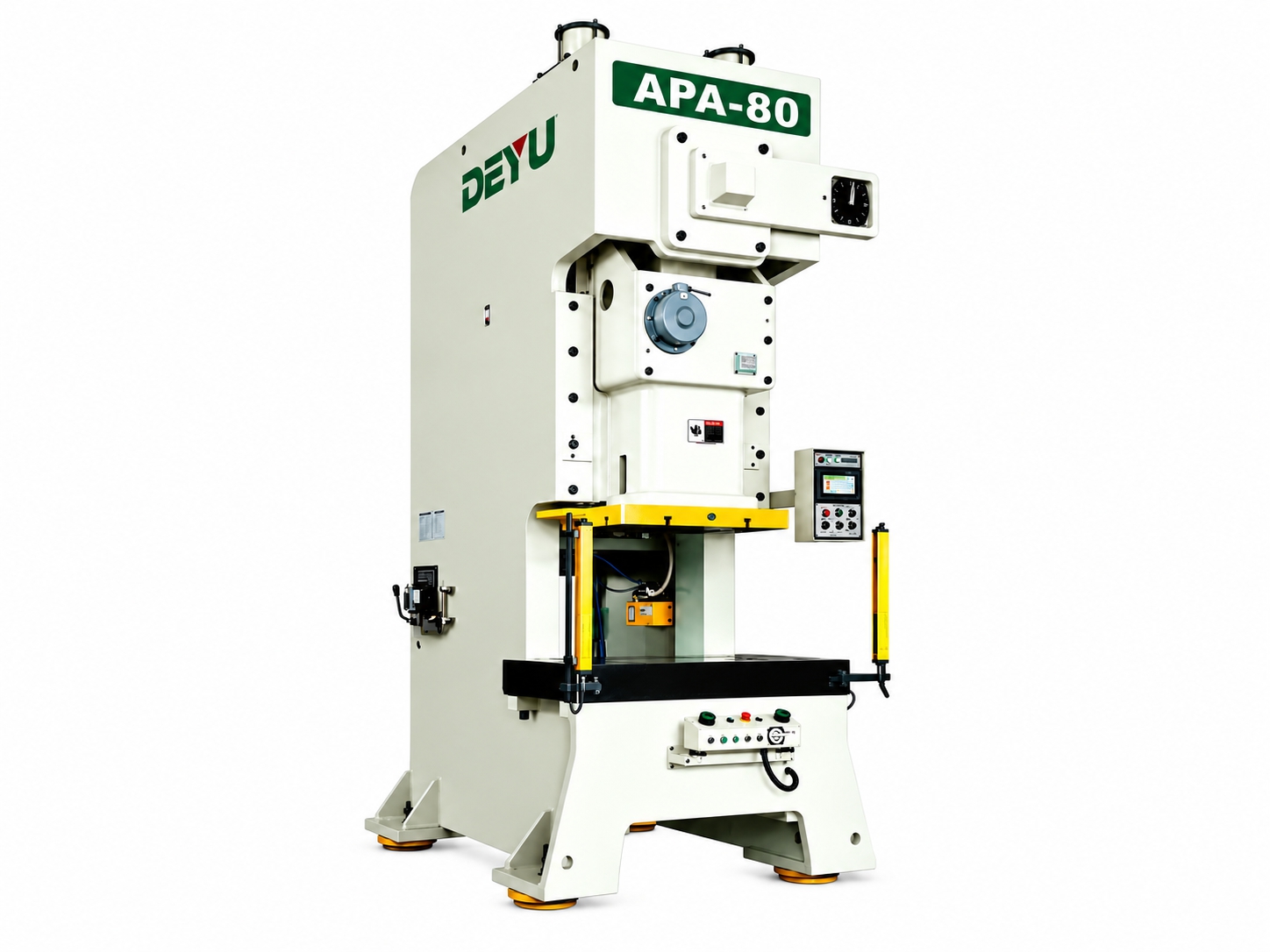
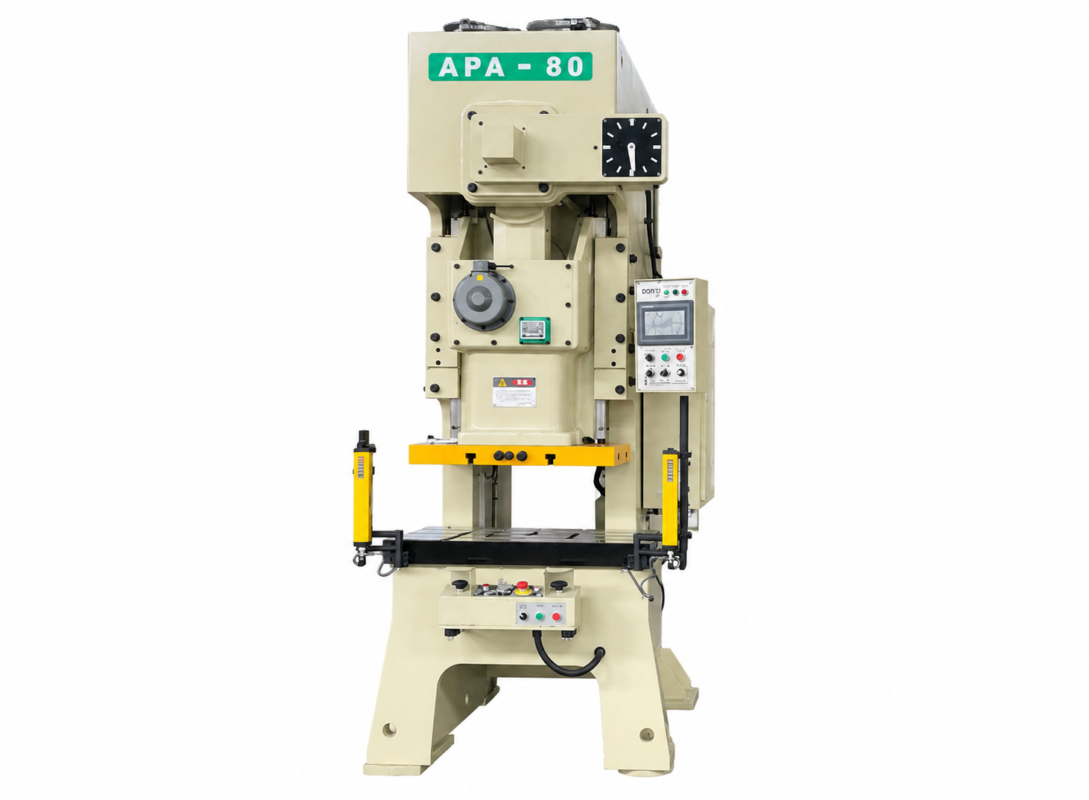
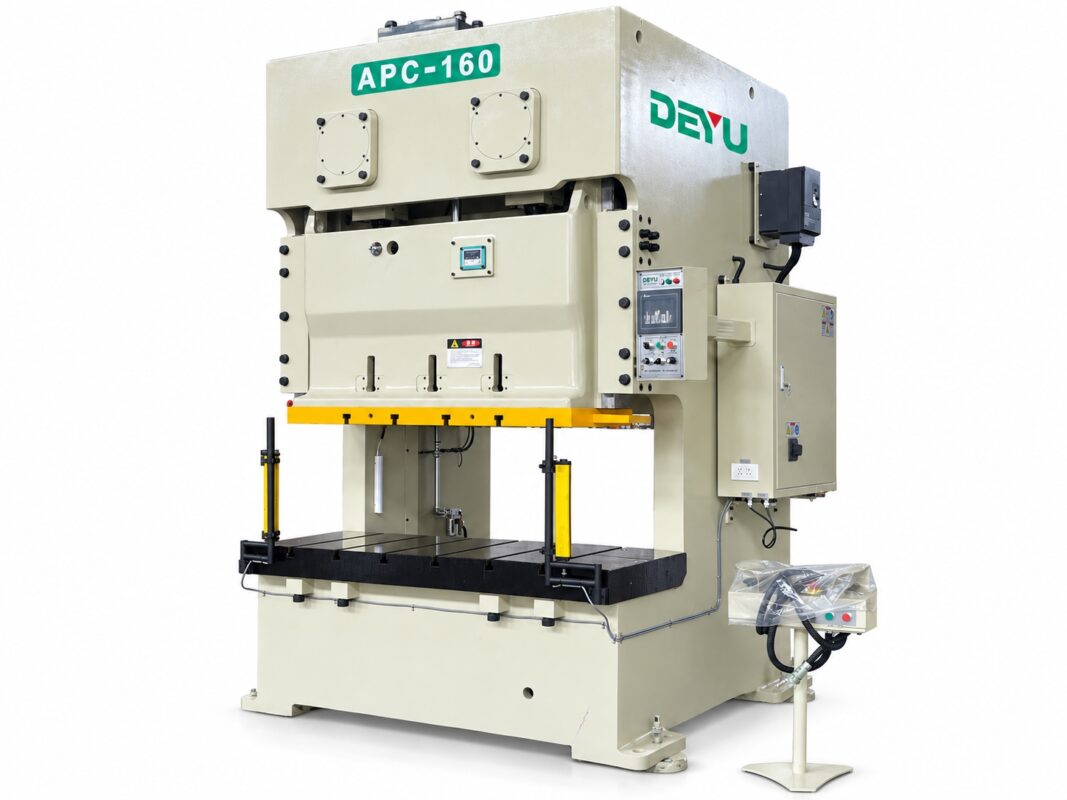
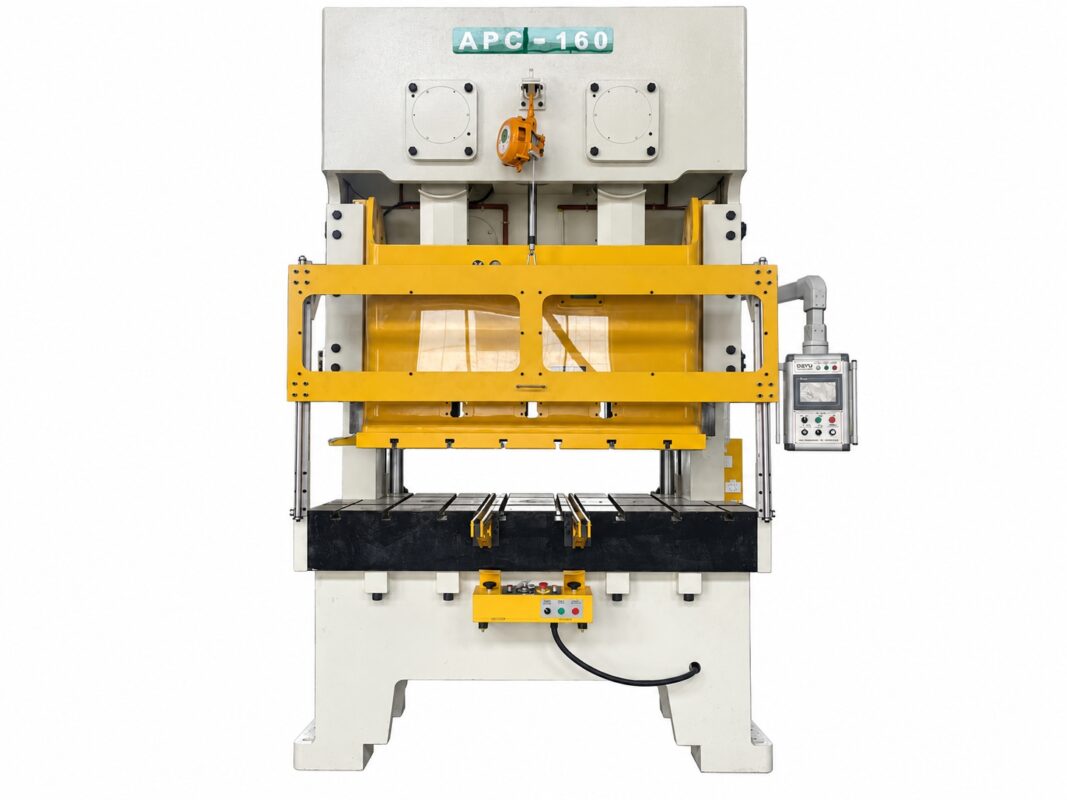
If your die fits a single-point working area, the APA Series provides a C-frame, single-crank structure from 15 to 315 tons. For wider dies, the APC Series uses a double-crank, two-point drive and provides a wider working table. Its capacity range is 110–315 tons.
Before we recommend a model, we need to check:
Your part drawing
Material type and thickness
Required tonnage
Die length, width, height and weight
Required stroke and production speed
Load position
Feeding equipment requirements
For coil-fed production, also send the coil width, coil weight and feed length.
A mechanical press works through repeated slide movement, but selecting one takes more than choosing a tonnage. Send us your part drawing and available die details. We will check them against the press specifications and help you select a suitable machine.
Learn how metal stamping is used for new energy vehicle brackets, mounting plates and connecting parts, and what to check when selecting a press and feeding equipment.
Understand the main stamping press specifications and what to check when comparing machines, from tonnage and stroke length to speed, bolster size and die height.
Progressive die stamping uses one die with several stations to produce metal parts continuously. Learn how the process works and how to choose a suitable stamping press.
Not all presses are the same. Compare mechanical vs. hydraulic on force delivery, speed, stroke flexibility, and typical uses—so you can match the machine to your parts.
Learn what information buyers should prepare before selecting a stamping press, including part drawings, material, die data, production speed and automation requirements.