A mechanical press and a hydraulic press can both cut and form metal. Put the same die on them, though, and they can perform quite differently.
The difference boils down to how the machine generates force and how the slide moves. Production speed, stroke length, part shape and material thickness all come into play. That is why precision press selection isn’t just about tonnage.
How Does a Mechanical Press Work?
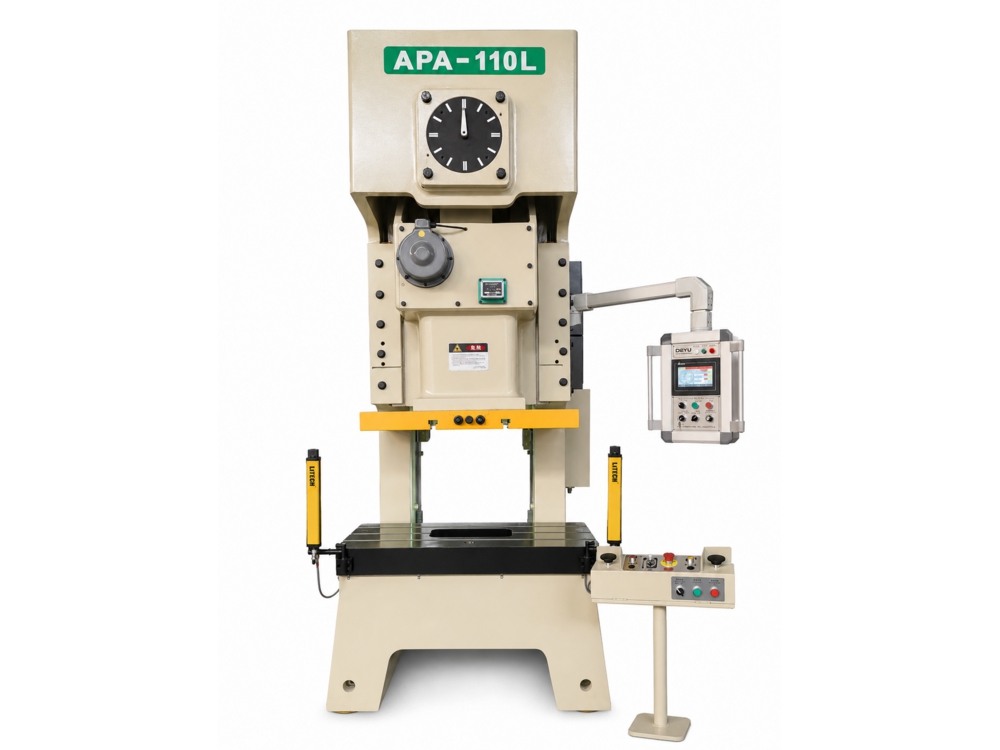
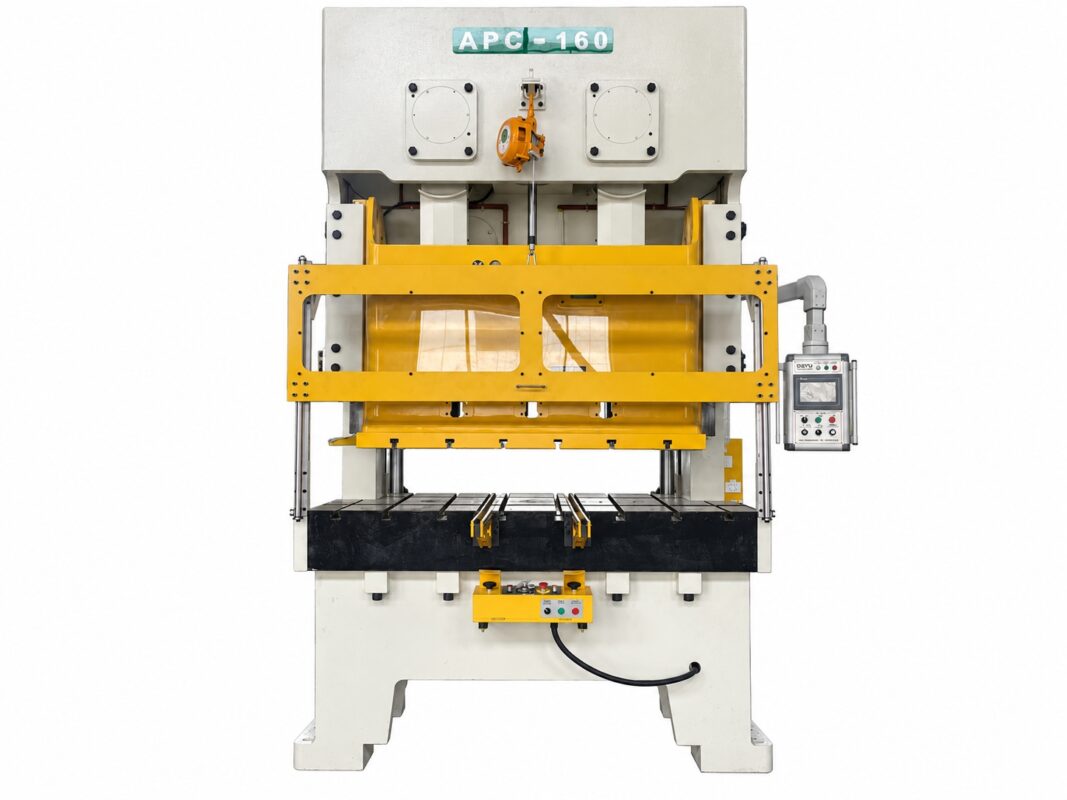
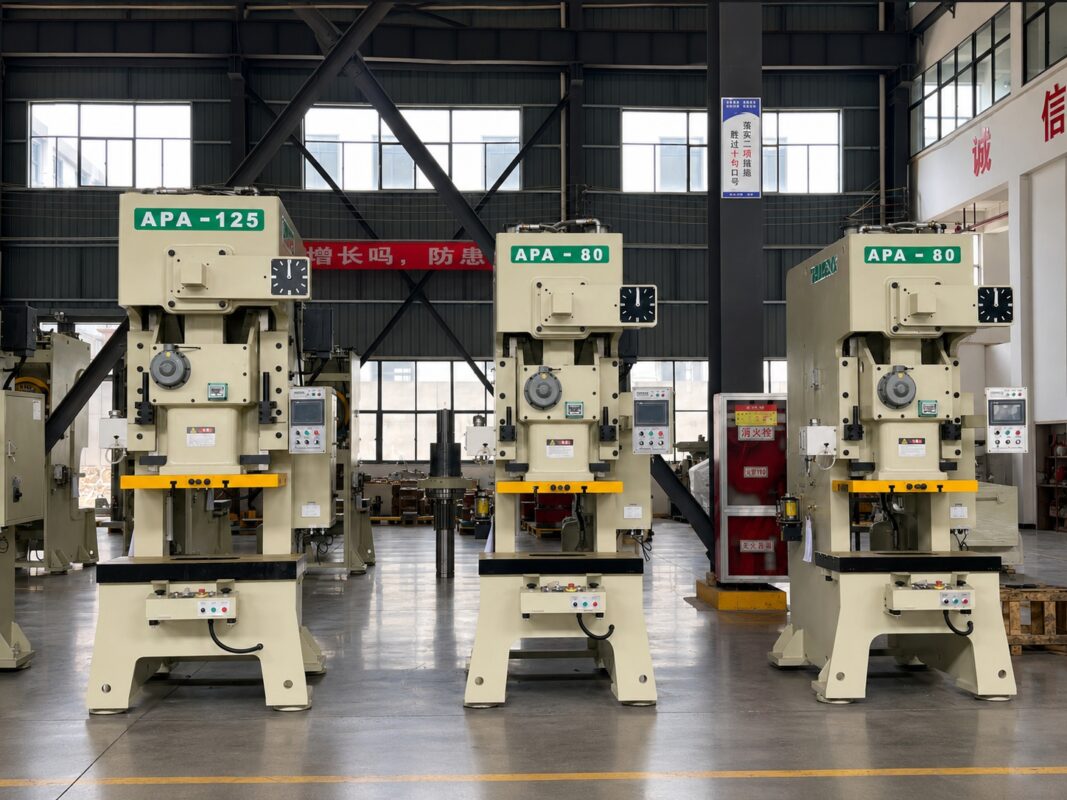
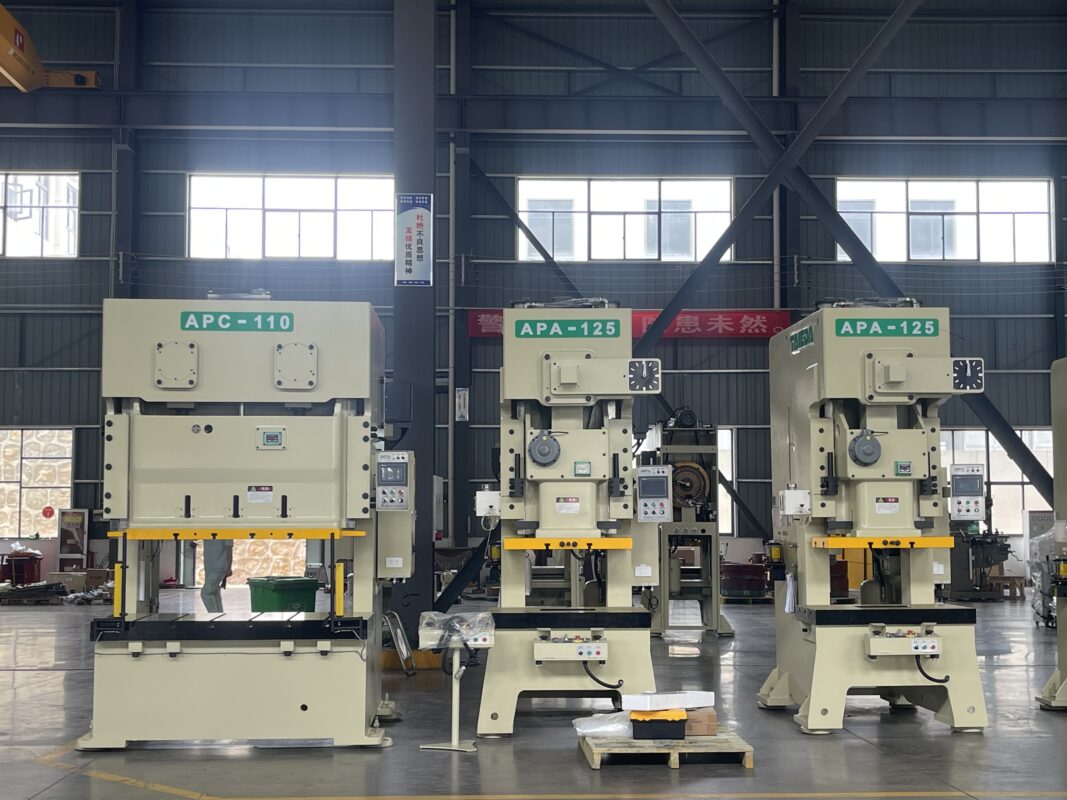
A precision mechanical press uses an electric motor to drive a flywheel. The flywheel stores energy as it spins. When the clutch engages, that energy passes through the crankshaft or eccentric drive, then through the connecting rod. The slide moves down, completes the stamping operation and returns.
The force isn’t the same throughout the stroke. It increases as the slide approaches bottom dead center. The machine hits its rated tonnage close to the bottom, not at the top.
This working pattern suits short, repetitive cycles. Take a progressive die line. The uncoiler feeds the coil, the feeder moves the strip forward at a fixed pitch, and the mechanical press completes one hit per stroke. The line keeps running at a steady clip.
Mechanical presses are commonly used for:
Blanking
Piercing
Bending
Shallow forming
Progressive die stamping
Automated metal stamping
For automotive brackets, electrical terminals, appliance parts and general hardware, speed and repeatability usually carry the day. That’s where a mechanical stamping press does its best work.
How Does a Hydraulic Press Work?
A hydraulic press works in a different way. A pump pressurizes the hydraulic fluid. Valves control the flow of the fluid into one or more hydraulic cylinders. The cylinders move the ram or slide and apply force to the workpiece.
Pressure, working speed, stroke position and dwell time can be adjusted according to the process. The hydraulic press can also provide its rated force through a larger portion of the stroke.
Why does that matter?
Take deep drawing. The material has to keep flowing while the punch moves farther into the die. Applying force only near the bottom of the stroke may not be enough. The process needs controlled force over a longer distance. A hydraulic press is usually a better fit for that job.
Hydraulic presses are commonly used for:
Deep drawing
Compression molding
Coining
Straightening
Press-fit assembly
Processes requiring adjustable dwell time
The hydraulic press normally runs slower than a mechanical press. Its strength is control, not stroke speed.
Mechanical Press vs. Hydraulic Press: Main Differences
Comparison
Mechanical Press
Hydraulic Press
Drive system
Motor, flywheel, clutch and crank/eccentric drive
Pump, hydraulic fluid, valves and cylinders
Force delivery
Available tonnage changes with slide position; rated tonnage is reached near the bottom of the stroke
Rated force is generally available through a larger portion of the stroke
Production speed
Usually faster and suited to repetitive, high-volume production
Usually slower, with adjustable working speed
Stroke control
Slide motion is mainly determined by the mechanical drive
Pressure, speed, position and dwell are easier to adjust
Typical processes
Blanking, piercing, bending, shallow forming and progressive die stamping
Deep drawing, molding, straightening, coining and press-fit assembly
Maintenance focus
Clutch, brake, gears, bearings, alignment and lubrication
Hydraulic fluid, filters, pumps, valves, hoses, seals and leakage control
Which Press Should You Choose?
So which one fits your job? If you’re doing fast, repetitive work—blanking, piercing, shallow forming, progressive die stamping—go mechanical. If you need a long stroke, adjustable force, or a pause at the bottom for deep drawing or heavy forming, hydraulic is the way to go.
Either way, the right pick comes down to your part shape, material, die size, tonnage, stroke, and output. Send those over to us—we’ll take a look and point you to the right machine.
Progressive die stamping uses one die with several stations to produce metal parts continuously. Learn how the process works and how to choose a suitable stamping press.
Learn what information buyers should prepare before selecting a stamping press, including part drawings, material, die data, production speed and automation requirements.