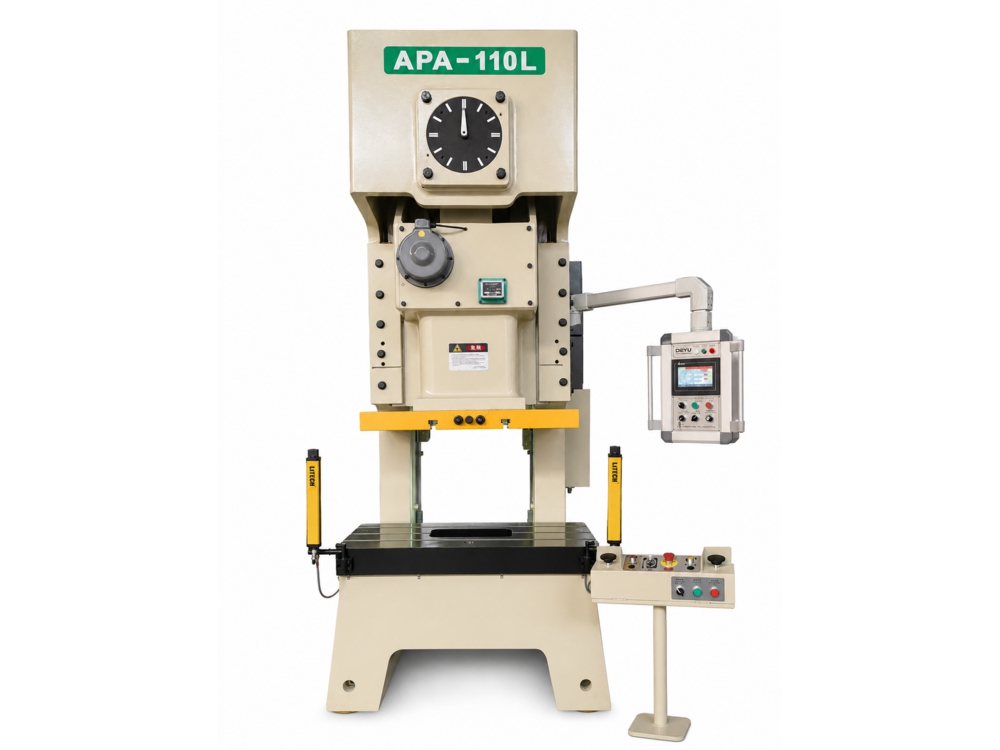
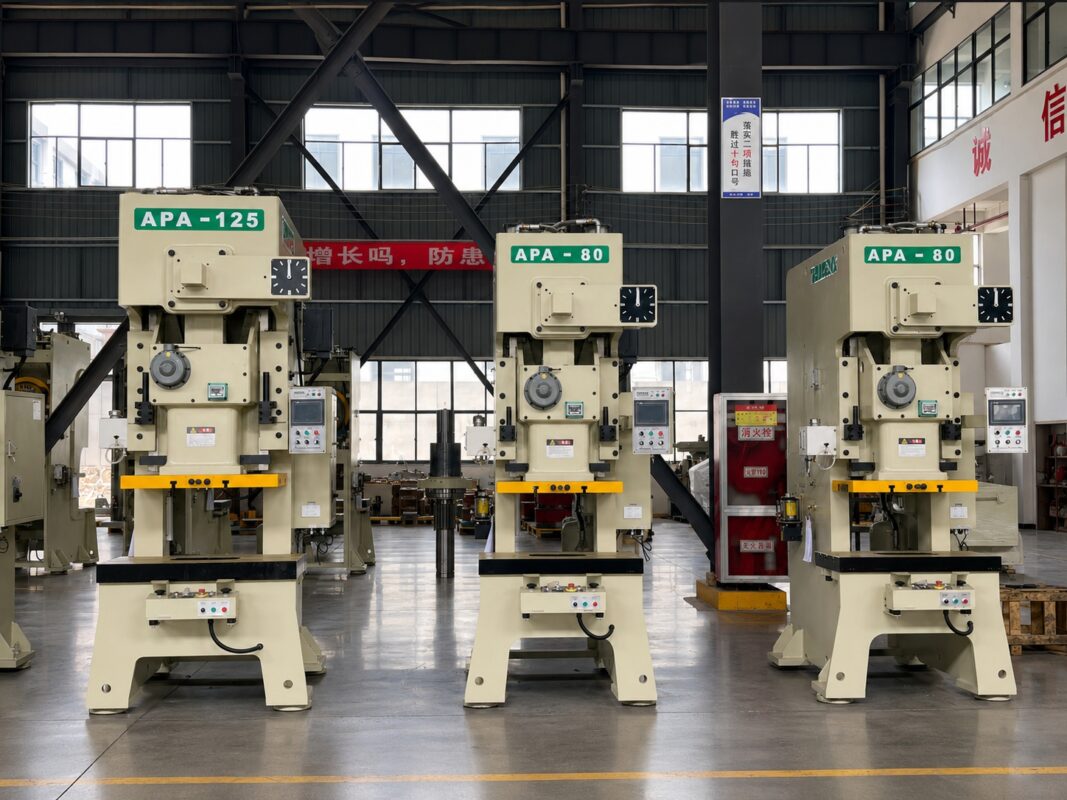
Stamping press specifications tell you the capacity, working dimensions and operating range of a machine. Understanding these figures helps you compare presses and check whether they suit your die.
The main specifications include tonnage, stroke length, speed, bolster size, die height and slide adjustment.
1. Tonnage and Rated Tonnage Point
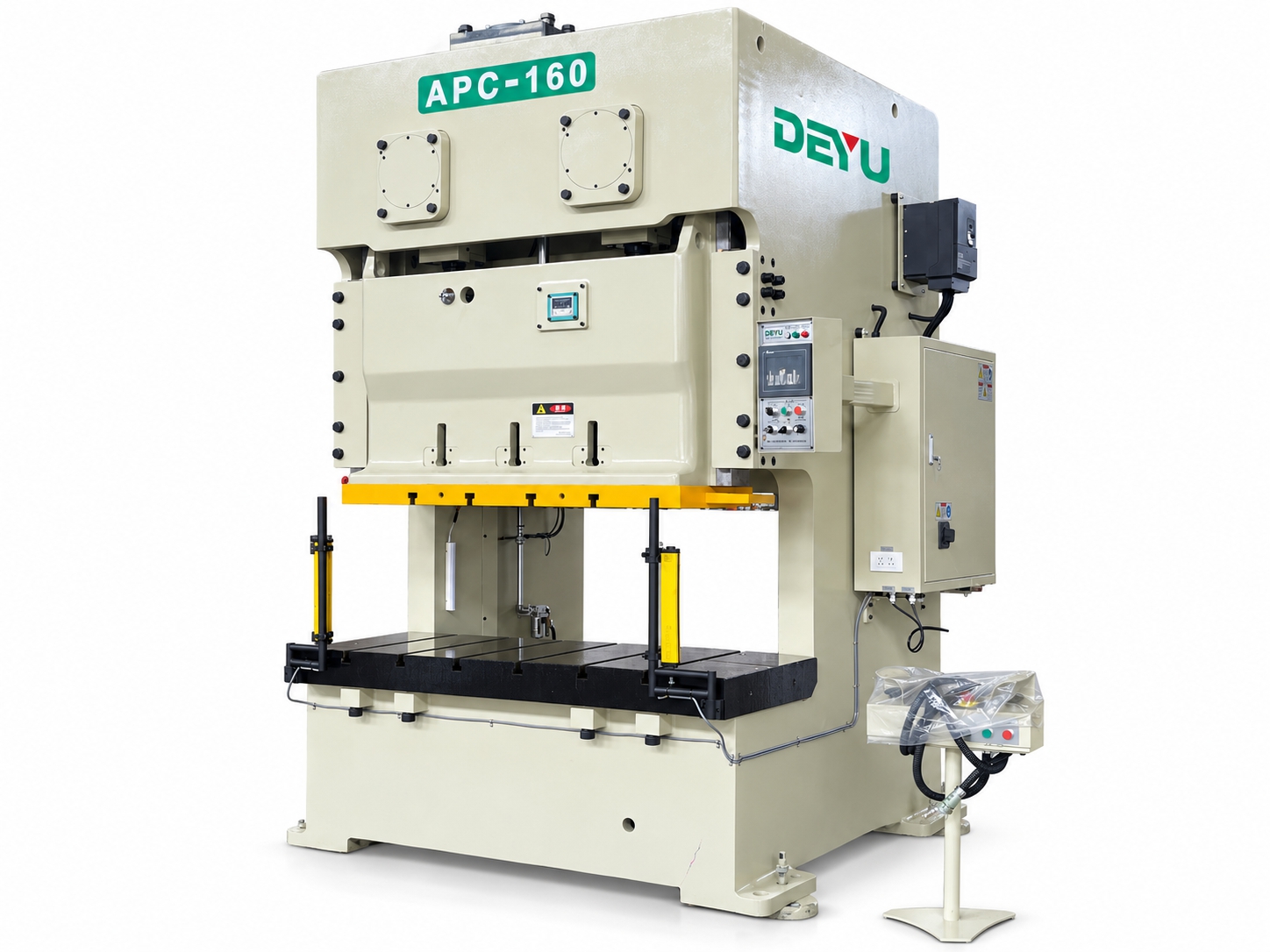
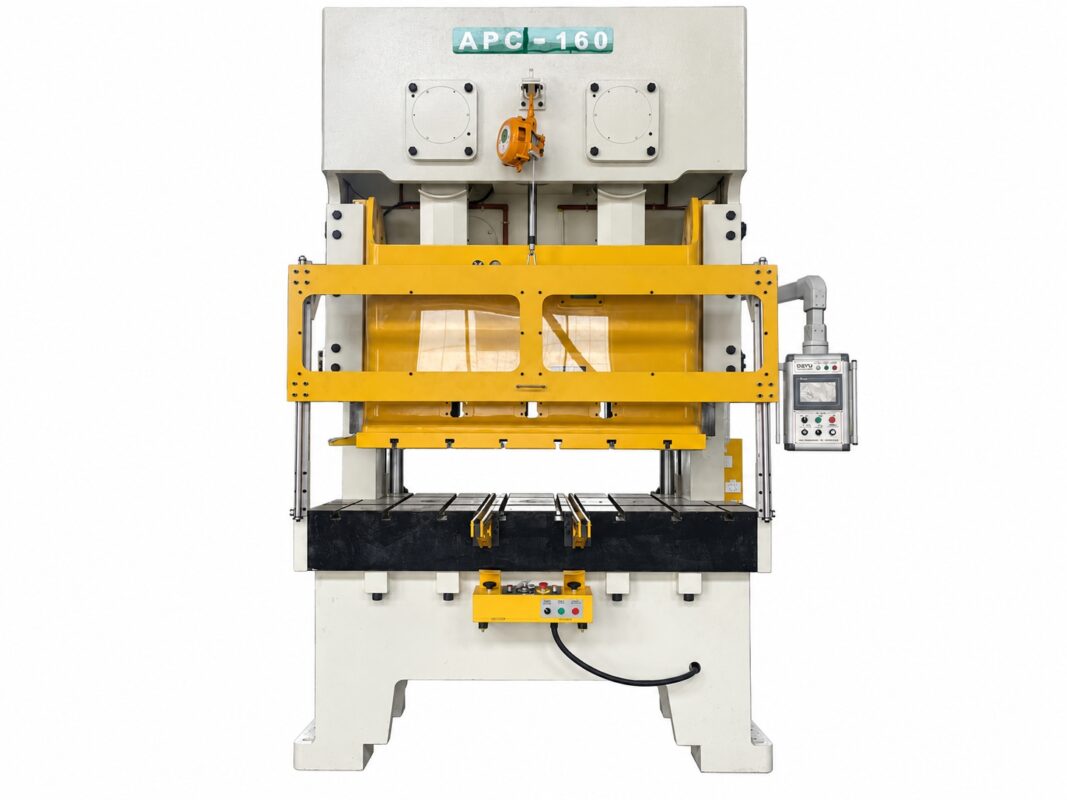
Tonnage is the nominal force capacity of the press. For example, the APC-160 has a capacity of 160 tons.
The rated tonnage point shows the distance above bottom dead centre where the rated force is available. Bottom dead centre, or BDC, is the lowest position of the slide.
When choosing a mechanical press, check both figures. The force required by your die must stay within the press’s permitted capacity throughout the working operation.
2. Stroke Length
Stroke length is the distance the slide travels between its highest and lowest positions. It is measured in millimetres.
The stroke must provide enough opening for material feeding, die operation and part removal. A longer stroke is not always necessary.
Check the machine version when comparing specifications. The same model may offer different stroke lengths and speed ranges.
3. Press Speed
Press speed is measured in strokes per minute, or SPM. One stroke is a complete down-and-up movement of the slide.
The APC-160 has a listed speed range of 30–55 spm for the V version and 40–85 spm for the H version.
Your production speed depends on the die, material, feeding equipment and part discharge. Check whether the listed speed is measured under no-load conditions. SPM alone does not tell you the number of finished parts produced per minute.
4. Bolster Size and Slide Size
The bolster supports the lower die, while the slide carries the upper die. Both must provide enough space for the die and its mounting arrangement.
LR means left to right. FB means front to back. For example, the APC-160 bolster size is 2000 × 760 × 150 mm.
Dimension
Description
2000 mm
Left-to-right length
760 mm
Front-to-back width
150 mm
Bolster thickness
You should also check the mounting positions, die weight and load position. Table dimensions alone do not confirm that a die is suitable for the press.
5. Die Height and Slide Adjustment
Die height indicates the available space for the closed die when the slide is at BDC under the stated adjustment condition. Check the manufacturer’s measurement definition before comparing machines.
Slide adjustment allows the slide position to be changed for different closed die heights. It does not change the stroke length.
Your die’s closed height must fit within the specified working range.
6. Comparing Presses with the Same Tonnage
Presses with the same tonnage can have different working tables, strokes and drive structures.
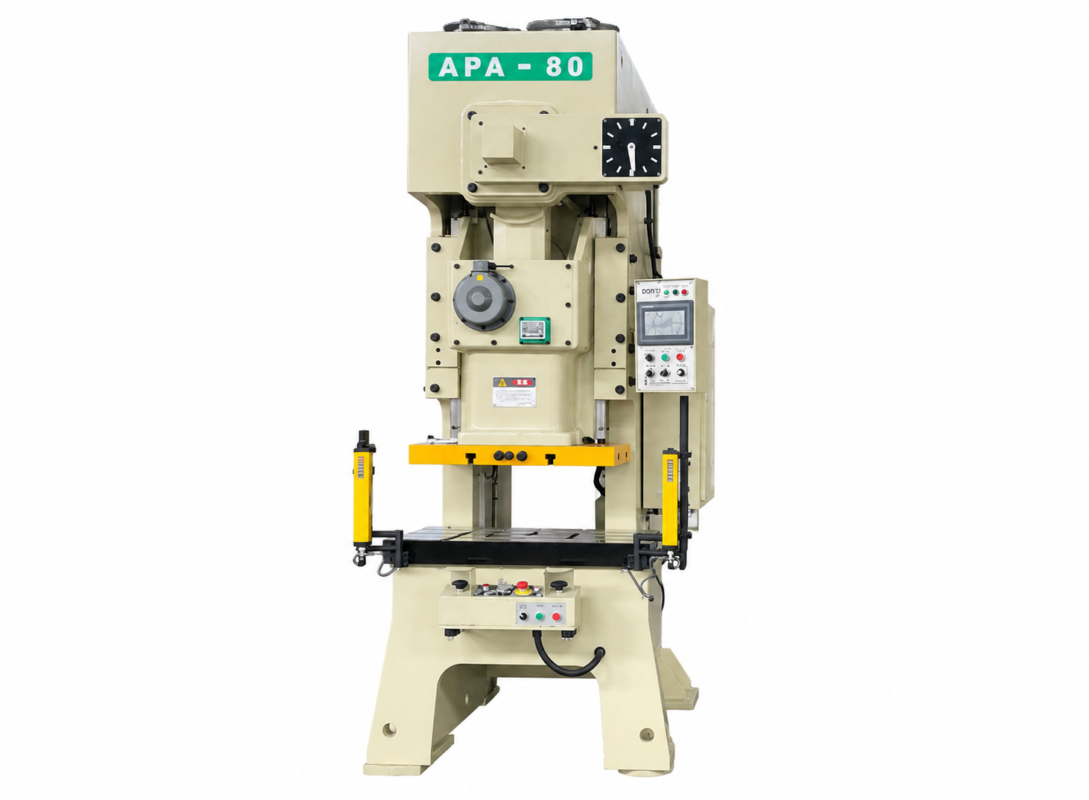
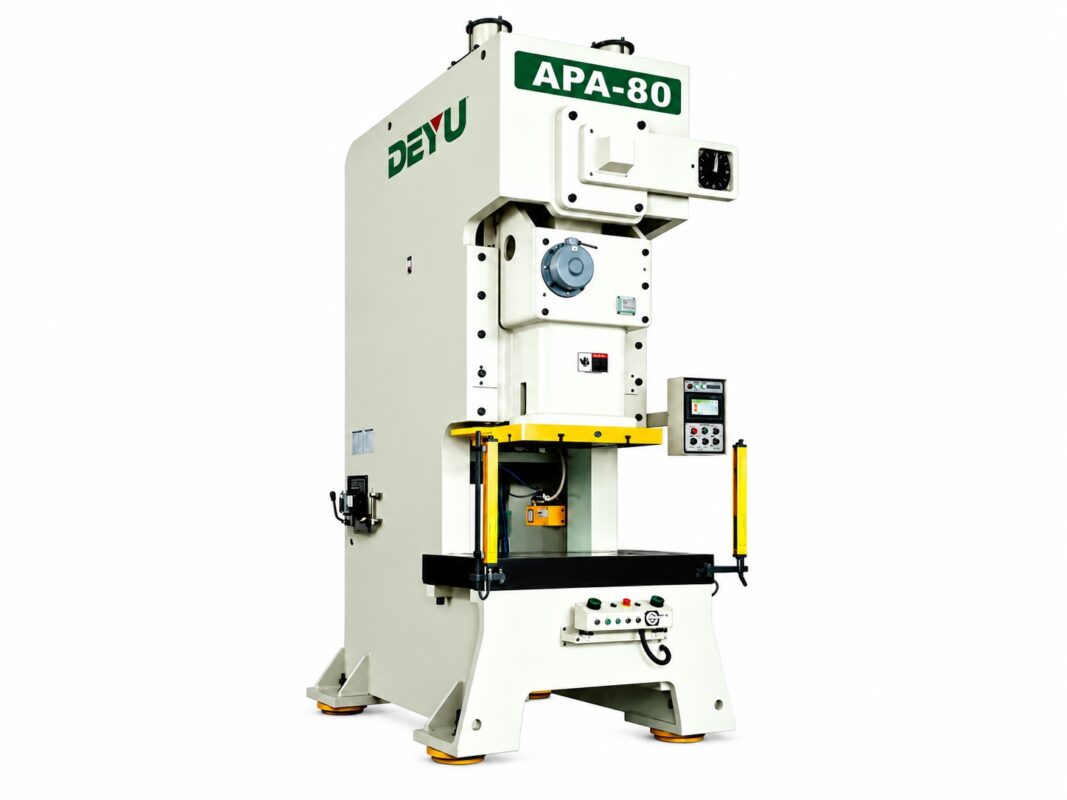
The APA Series is a C-frame single-crank press available from 15 to 315 tons. The APC Series is a C-frame double-crank, two-point press available from 110 to 315 tons, with a wider working table.
Compare the complete specifications with your die requirements. A higher tonnage does not automatically mean a better fit.
7. Choosing a Press for Your Die
When comparing stamping press specifications, check the required force, die dimensions, working clearance and production speed together.
Send us your part drawing, material type and thickness, die dimensions and required output. If you are replacing an existing press, include a machine photo and nameplate photo. We will use these details to check the specifications and recommend a suitable model.
Learn how metal stamping is used for new energy vehicle brackets, mounting plates and connecting parts, and what to check when selecting a press and feeding equipment.
Understand how a mechanical press works, from the flywheel and crank mechanism to the slide and die. Learn its main components, stamping uses and what to check before selecting a machine.
Progressive die stamping uses one die with several stations to produce metal parts continuously. Learn how the process works and how to choose a suitable stamping press.
Not all presses are the same. Compare mechanical vs. hydraulic on force delivery, speed, stroke flexibility, and typical uses—so you can match the machine to your parts.