
When selecting a precision press for metal stamping, the frame structure is one of the main factors to consider. C-frame presses and straight-side presses are two common designs. Both can be used for punching, blanking, bending and forming, but they differ in working access, die size, load stability and cost structure.
In this article, we will explain the difference between a C-frame press and a straight-side press. We will also compare their structures, working areas and suitable applications to help you choose the right press for your production.
1. What Is a C-Frame Precision Press?
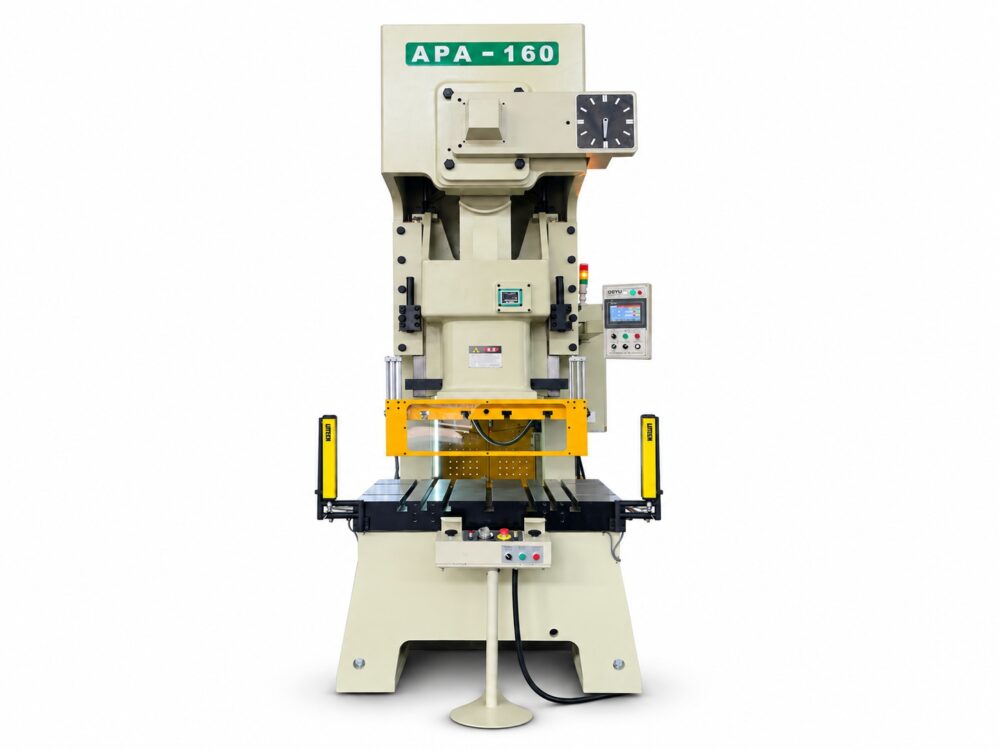
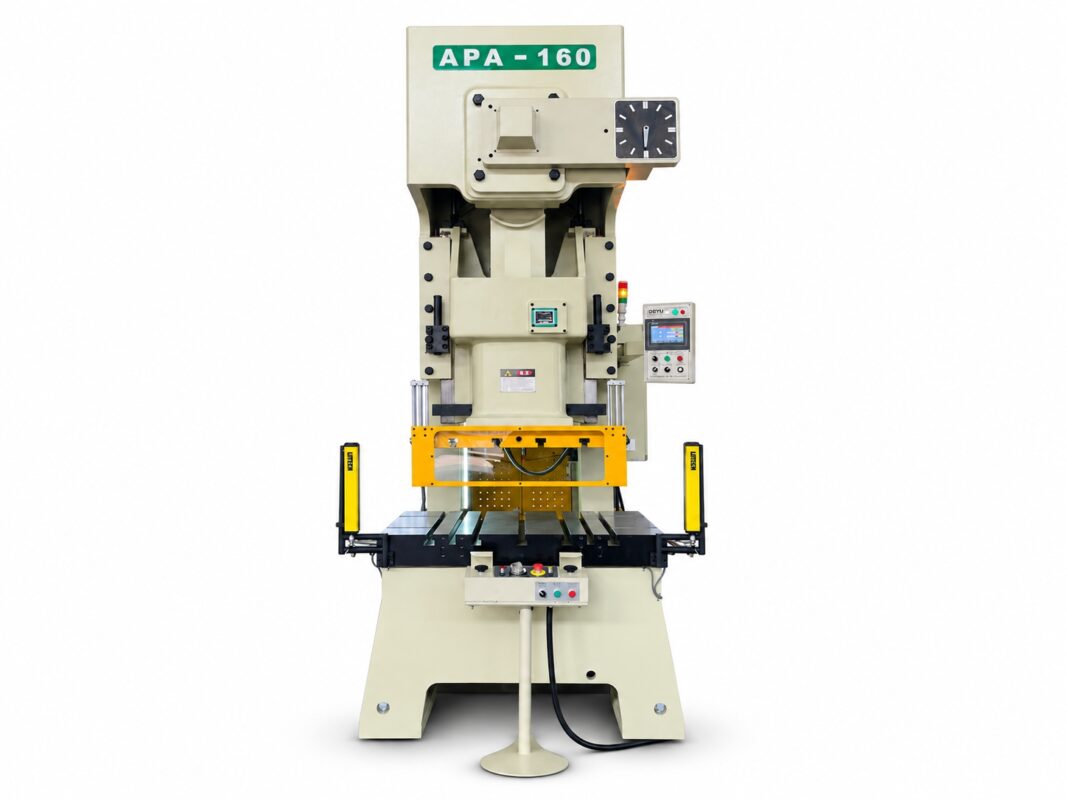
A C-frame precision press features an open-front frame shaped like the letter “C.” This open design provides convenient access to the die and material, making die installation, adjustment, inspection and material feeding easier and more efficient.
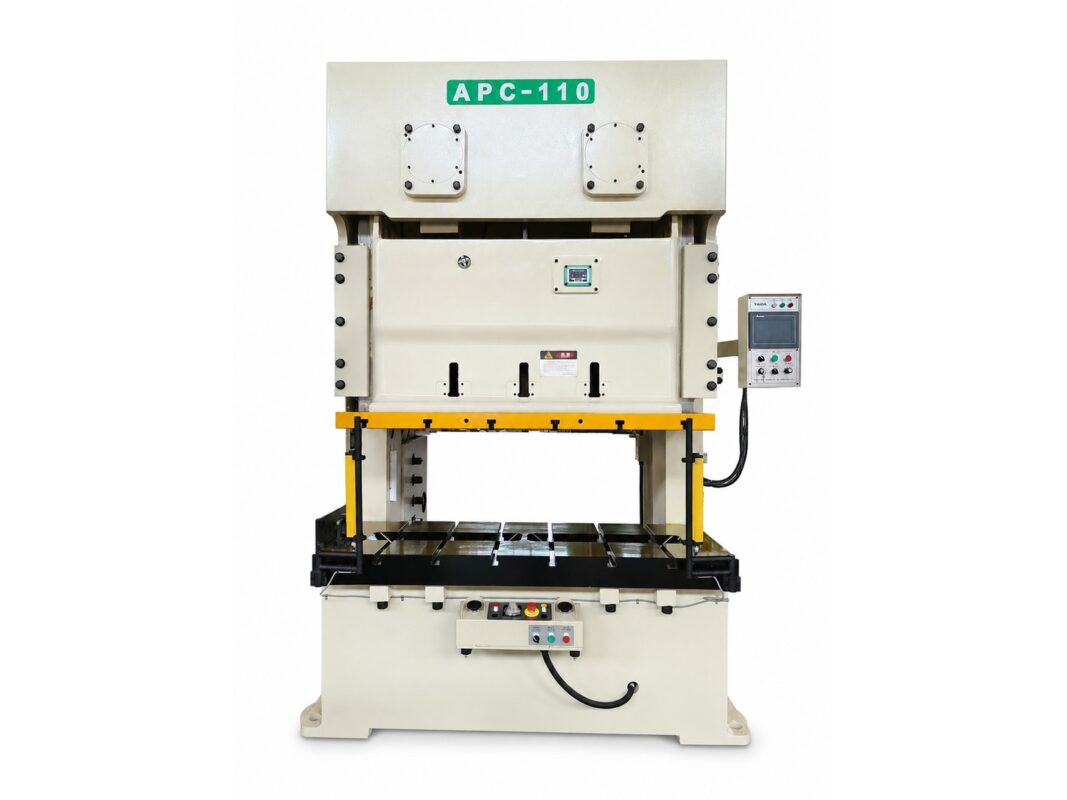
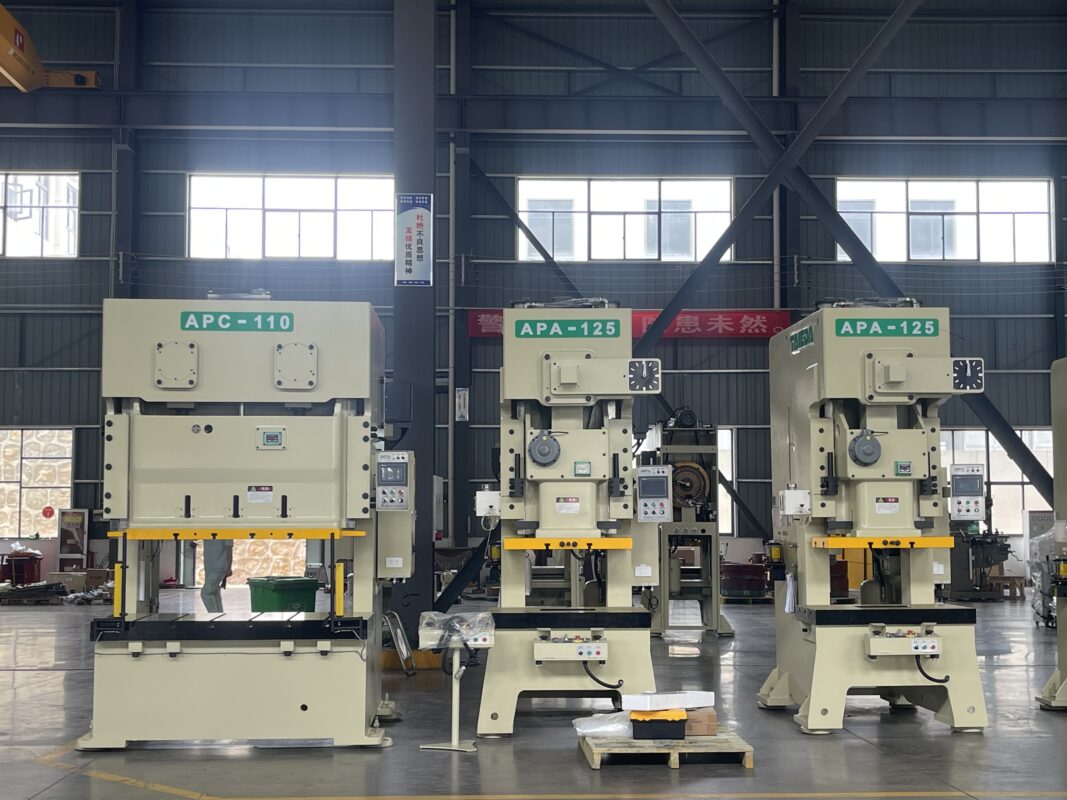
DEYU offers two C-frame press structures. The APA Series is a single-crank precision press with capacities from 15 to 315 tons. The APC Series adopts a double-crank, two-point structure and provides a wider working table than the APA Series, making it suitable for wider dies and larger workpieces.
Key features of C-frame precision presses include:
- Open access to the working area
- Convenient die installation and adjustment
- Single-point and two-point structures for different die sizes
- Compatibility with feeders, decoilers, straighteners and automated stamping lines
2. What Is a Straight-Side Precision Press?
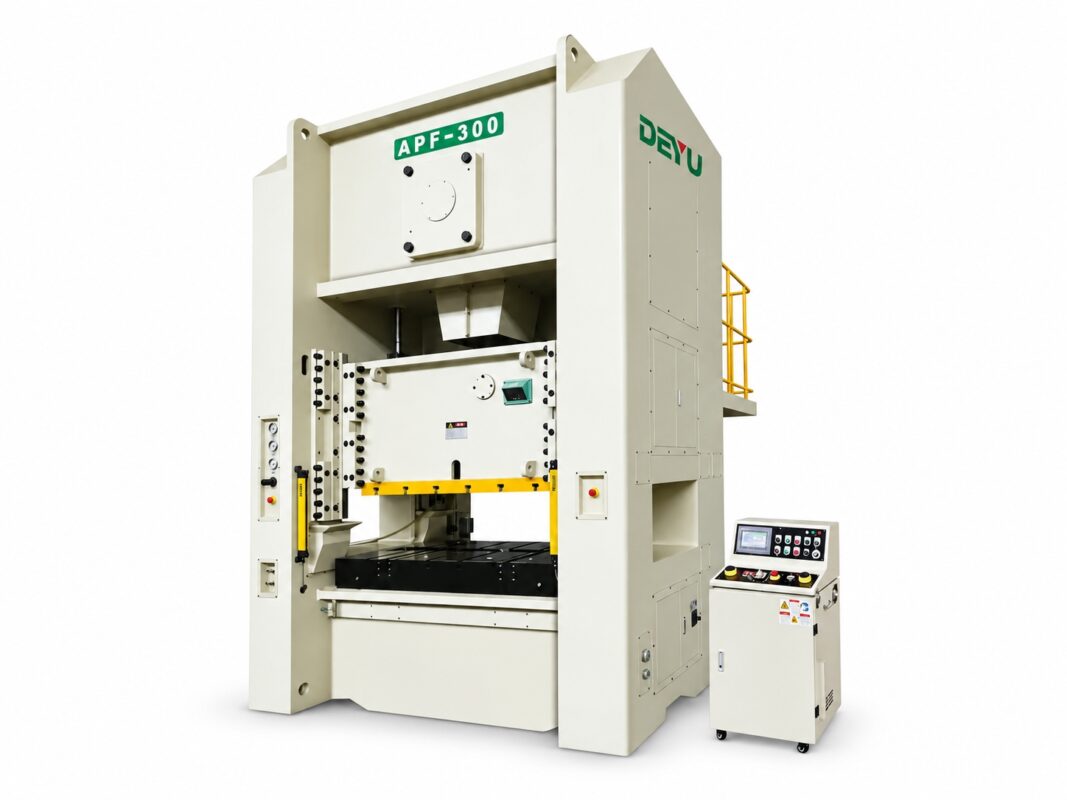
A straight-side precision press has a closed or frame-type structure with supports on both sides of the working area. Compared with an open C-frame, this structure provides greater frame rigidity and better support around the slide and working table.
DEYU’s APF Series is a straight-side/closed-frame precision press. The APE Series is available from 110 to 800 tons and adopts a double-crank drive, a wide working table and a connecting-rod structure. High-grade alloy steel is used in its construction. The optimized design is suitable for large dies, dies subjected to high impact loads and stamping operations with off-center loads.
Key features of straight-side precision presses include:
- Rigid frame support on both sides
- Wide working area for large dies
- Double-crank structure for wider stamping operations
- Suitable for high-impact and off-center die applications
- Compatibility with automated stamping lines
3. C-Frame Press vs Straight-Side Press: Key Differences
The main differences between a C-frame press and a straight-side press are the working access, die size and load condition. The following comparison shows how these differences affect daily production and press selection.
| Comparison | C-Frame Press | Straight-Side Press |
| Frame & structure | Open front and sides — easy to see and reach the die | Supported on both sides — more rigid for tough stamping jobs |
| Die access | Simple to install, adjust, and inspect the die | Less open, but better support around the die |
| Die size | Works well when the die fits the table and the load is balanced | Great for large dies that need a wider table and stronger support |
| Working table | APA: single-point. APC: two-point, wider table for more space | APE: wide table, double-crank for larger dies |
| Load handling | Check die position and off-center loads before you buy | APE is built for large dies, high impact, and off-center loads |
| Tonnage range | APA: 15–315 tons; APC: 110–315 tons | APE: 110–800 tons |
| Automation | Works with feeder, decoiler, and straightener | Connects with feeding equipment for automated lines |
| Cost factors | Depends on APA or APC, tonnage, table size, stroke, and automation | Depends on tonnage, table size, structure, die, and automation |
4. How Do Die Size and Load Position Affect the Choice?
Before you pick a press, check the die length, width, height, and weight. A machine may have enough tonnage, but if the table or shut height doesn’t fit the die, it won’t work. That’s why tonnage alone is a bad way to choose a press.
For a single-point stamping job, the APA Series may be the better choice. If your die is wider and needs two-point support, the APC Series gives you a wider table and a double-crank structure. And if you’re running large dies, high-impact stamping, or off-center loads, the APE straight-side press provides stronger support around the working area.
Always check the die layout and load position before you settle on a press model.
5. Working Access and Die Changes
When easy die access is important, a C-frame press gives you a clear advantage. The open front and sides let you install, inspect and adjust the die more easily. You can also check the material or change the die regularly without much hassle.
A straight-side press has a more enclosed working area. Access is not as open as with a C-frame press, but the support on both sides is better suited to large dies and demanding stamping work. If easy access is your priority, go with a C-frame press. If the die needs stronger frame support, go with a straight-side press.
6. What Affects the Cost of a Press?
When you compare the cost of a C-frame press and a straight-side press, it is easy to focus only on the initial machine price. However, the frame type alone does not determine the final cost. Tonnage, table size, stroke, press speed, drive structure and automation equipment must also be considered.
For example, a standard stamping job may only require an APA single-point press. If your die is wider, you may need the larger table and two-point drive of an APC press. For a large die or a demanding load condition, an APF or APE straight-side press may be required.
At DEYU, we first check your die and production requirements. We can then compare press models with the correct specifications instead of comparing two machines that are designed for different jobs.
7. When Is a C-Frame Press the Right Choice?
A C-frame press is a good place to start if you need easy access to the die. Its open front and sides make die installation, adjustment and inspection more convenient. It also gives you more space when checking the material during production.
For a single-point stamping job, you can look at the DEYU APA Series, which covers 15 to 315 tons. If your die is wider and needs a larger working table, the APC Series provides a double-crank, two-point structure from 110 to 315 tons.
You can also connect either series with a feeder, decoiler and straightener when automatic material feeding is required.
8. When Should You Choose a Straight-Side Press?
If your project uses a large die or involves high-impact and off-center loads, a straight-side press may be the better option. Its frame supports the working area from both sides, giving the die more support during stamping.
DEYU offers the APF and APE straight-side/closed-frame press series. The APE Series covers 110 to 800 tons and uses high-grade alloy steel, a double-crank drive, a wide working table and a connecting-rod structure. This design is intended for large dies and demanding load conditions.
A straight-side press can also be connected with feeding equipment. If you are planning an automated stamping line, we will check the press and feeding system together.
9. What Should You Tell Us Before Selecting a Press?
To recommend the right press, we need to understand both your part and your die. Providing only the required tonnage is usually not enough because presses with the same tonnage may have different table sizes, strokes and die spaces.
Before we select a model, please provide:
- Your stamped part drawing and dimensions
- Material type and thickness
- Required press tonnage
- Die length, width, height and weight
- Required stroke and production speed
- Type of die
- Required working table size
- Position of the load on the table
- Feeder, decoiler and straightener requirements
- Expected production volume
If some of this information is not available, you can send us the part drawing, die drawing or photos of your current press. We can use them as a starting point for the selection.For more details, see our guide on information needed to select a stamping press.
10. Which Press Is Right for Your Production?
If easy die access and flexible operation are your main concerns, start with a C-frame press. The APA Series is the single-point option, while the APC Series gives you a wider table and two-point drive.
If your die is large or your stamping job involves high-impact or off-center loads, look at a straight-side press. The APF and APE Series provide support on both sides of the working area, while the APE Series covers applications up to 800 tons.
The final choice should not be based on the frame name or tonnage alone. Send us your part drawing, material thickness, die dimensions and target production speed. We will check the press structure, tonnage, table size and automation requirements with you before recommending a model.