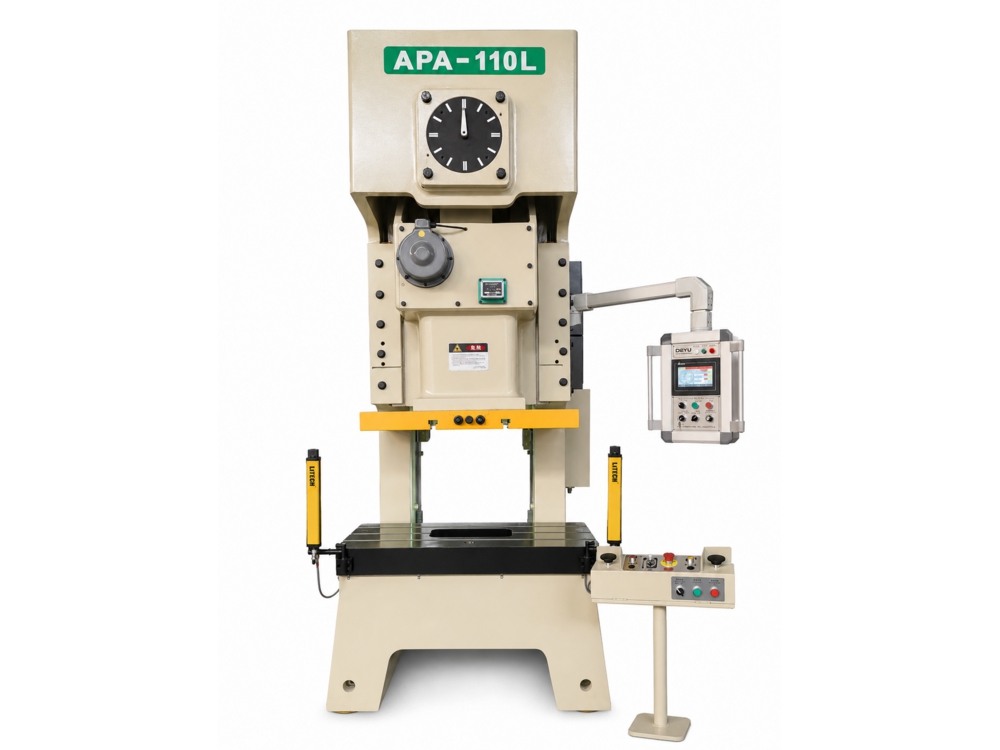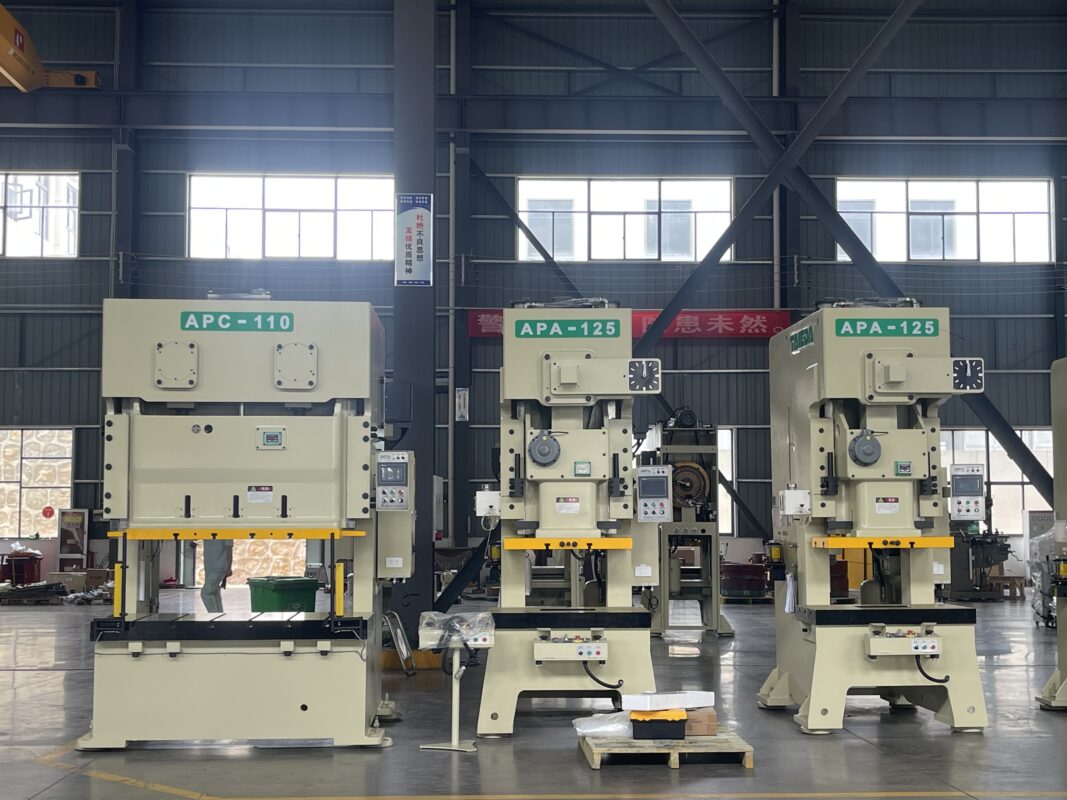

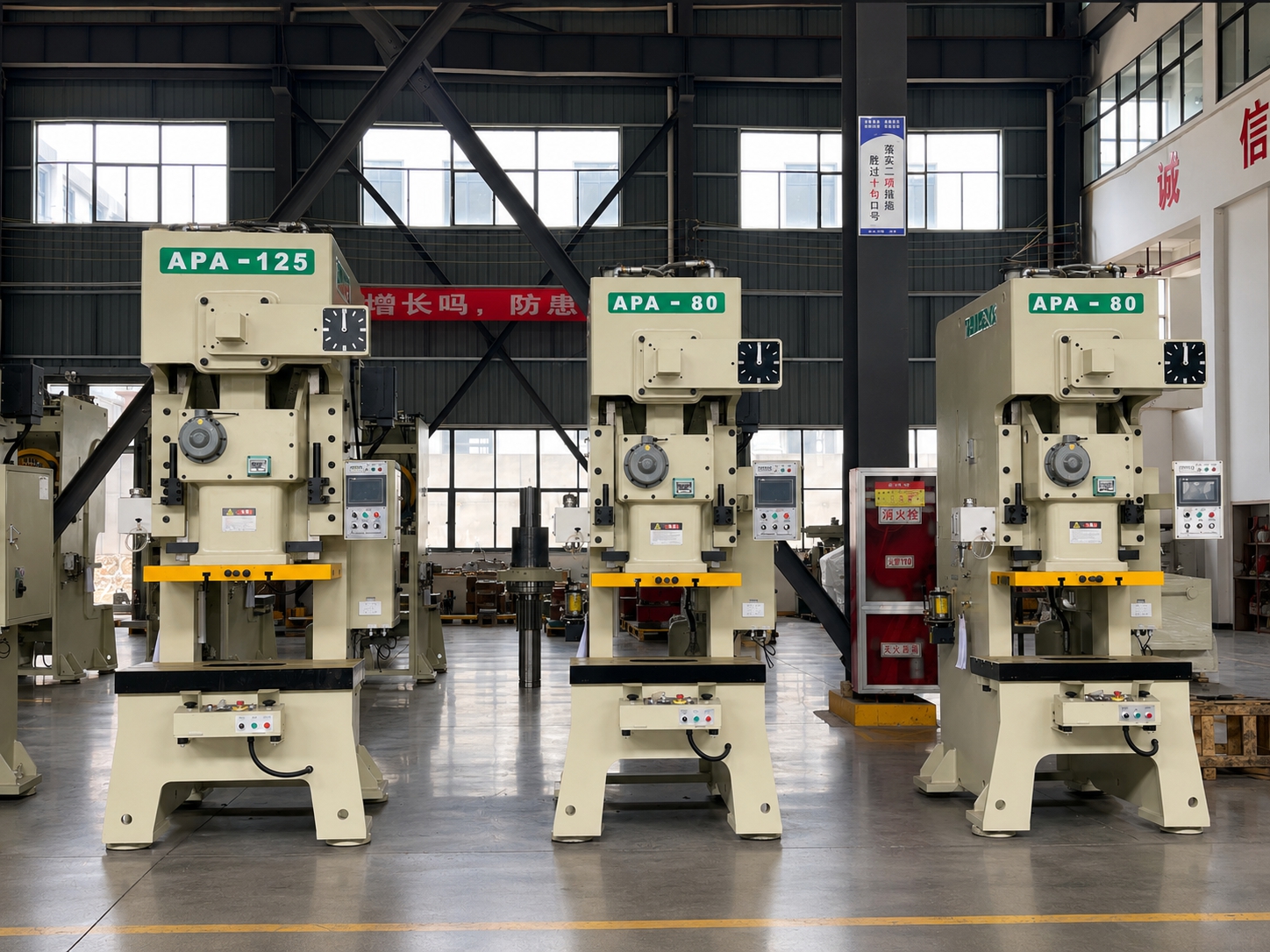
When comparing stamping presses, buyers often begin with tonnage. However, tonnage alone is not enough to determine whether a press is suitable for a particular part and die.
Stroke length, production speed, die height, bolster size and other specifications also affect compatibility, productivity and operating stability. Understanding these parameters can help buyers communicate their requirements clearly and avoid selecting a press that does not match the application.
Below are eight key stamping press specifications to review before choosing a machine.
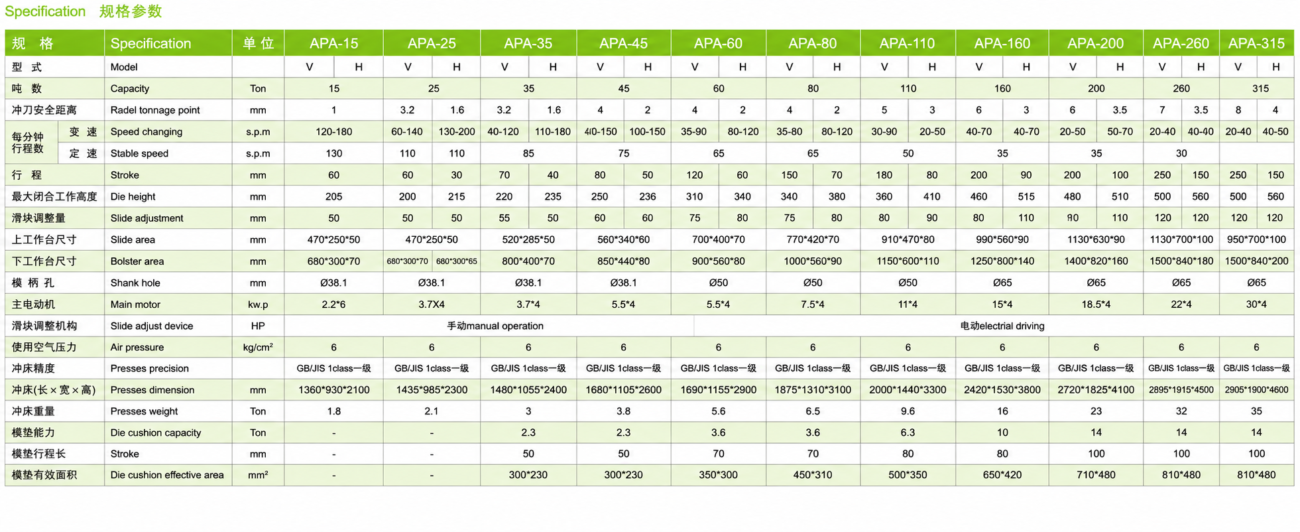
1. Press Capacity and Tonnage Rating Point
Press capacity is the maximum rated force that the machine can deliver under specified operating conditions. It is commonly expressed in tons or kilonewtons (kN).
It is important to note that a mechanical press does not provide its full rated tonnage throughout the entire stroke. The available force increases as the slide approaches bottom dead center. Therefore, the tonnage rating point should be considered together with the required forming force and the position where that force occurs.
The selected capacity should be based on the material, thickness, part geometry, cutting perimeter, forming process and die design. Choosing a press only by nominal tonnage may lead to insufficient capacity or unnecessary investment.
2. Stroke Length
Stroke length is the total vertical travel of the slide from top dead center to bottom dead center.
A longer stroke provides more space for loading, unloading and forming deeper parts. A shorter stroke can be suitable for flat or shallow components and may support higher production speeds.
The required stroke depends on the part depth, die structure, feeding method and the space needed to remove the finished part or scrap.
3. Strokes per Minute (SPM)
SPM indicates how many complete slide cycles the press can perform in one minute. It is an important reference for estimating production output.
However, the maximum SPM shown in a specification table is not automatically the correct production speed. Actual operating speed may be limited by material feeding, die performance, lubrication, part discharge, automation and quality requirements.
For progressive stamping, the press speed must also match the feeder and the pitch of the die.
4. Die Height or Shut Height
Die height, sometimes called shut height depending on the manufacturer’s definition, describes the available vertical space for the die when the slide is at bottom dead center and the slide adjustment is in its specified position.
Because manufacturers may measure this value from the top of the bolster or from the press bed, buyers should confirm the reference point before comparing machines.
The closed height of the die must fall within the machine’s usable die-height range. Otherwise, the die may not fit correctly even if the press has sufficient tonnage.
5. Slide Adjustment
Slide adjustment is the vertical range through which the slide position can be adjusted. It allows the press to accommodate dies with different closed heights and helps set the correct working position.
This value should be reviewed together with die height. A larger adjustment range provides greater flexibility, but the actual requirement should be determined from the die dimensions.
6. Bolster and Slide Area
The bolster area is the usable mounting surface on the press bed, while the slide area is the mounting surface for the upper die.
Both dimensions are normally shown as left-to-right by front-to-back. The die must fit within these areas with sufficient space for clamping, locating and maintenance.
Buyers should compare the complete die dimensions, not only the dimensions of the stamped part. The bed opening, T-slots and die-clamping method may also need to be confirmed.
7. Throat Depth and Frame Opening
For a C-frame press, throat depth indicates the distance from the centerline of the slide to the inside of the frame. It affects the maximum front-to-back die and material space available.
For straight-side presses, buyers should check the distance between the columns and the side-opening dimensions. These values affect die loading, coil feeding, transfer movement and access for maintenance.
8. Motor Power and Utility Requirements
Motor power supports the press drive, but it should not be treated as a direct substitute for tonnage or forming energy. The suitability of the drive depends on the process, speed and workload.
Buyers should also confirm the required power supply, voltage, frequency and compressed-air pressure. These details are especially important for overseas installations, where factory utilities may differ from the manufacturer’s standard configuration.
Why Specifications Must Be Evaluated Together
No single specification can determine the correct press model. For example, a machine may provide enough tonnage but have an unsuitable bolster size, insufficient die height or an operating speed that does not match the feeding system.
Before requesting a recommendation, buyers should prepare the following information:
Part drawing and finished-part dimensions
Material type, thickness and width
Die drawing, die dimensions and die weight
Required forming process and estimated tonnage
Target production speed
Feeding, transfer and automation requirements
Local voltage, frequency and air-supply conditions
With this information, the press manufacturer can evaluate the application more accurately and recommend a suitable machine configuration.
How DEYU Can Help
DEYU manufactures precision stamping presses for automotive parts, metal components, household appliances, electronics and general manufacturing applications.
Our team can review your part, material and die information and recommend a suitable press model based on the actual production requirements. Contact DEYU to discuss your stamping project and request a technical proposal.