
Single-crank and double-crank presses are both mechanical presses used for metal blanking, piercing, bending and forming. Although they perform similar stamping operations, they differ in drive configuration, working area, load distribution and suitable die size.
Understanding these differences can help manufacturers select a press that matches their tooling and production requirements.
Single-Crank C-Frame Press
Design
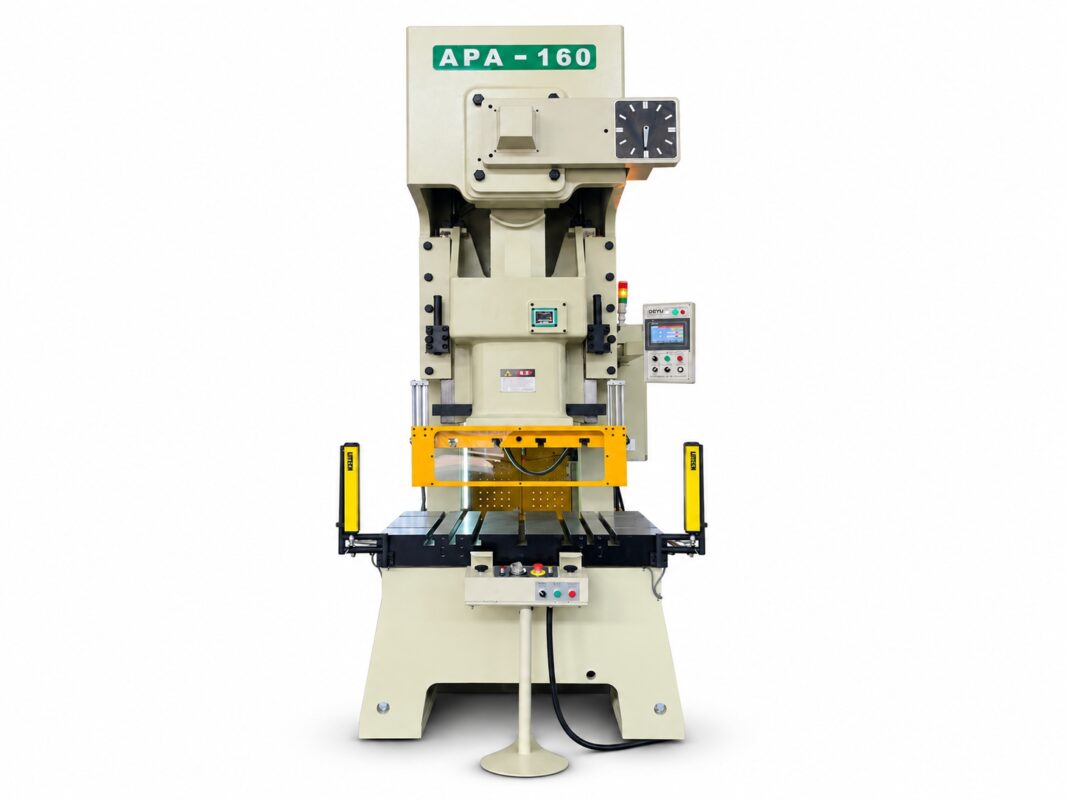
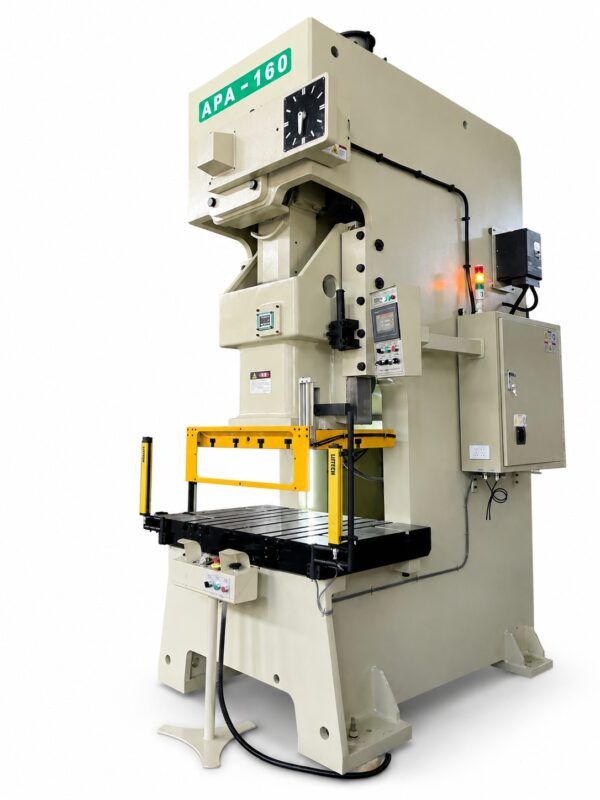
A single-crank press uses a central drive position to move the slide. Its structure is relatively compact, and the open-front C-frame provides convenient access to the die area.
DEYU’s APA Series C-frame single-crank presses are available from 15 to 315 tons.
Operation
The single-crank drive transmits force through the central area of the slide. It is best suited to dies where the stamping load is reasonably centred and distributed within the permitted working area.
Applications
Single-crank presses are commonly used for:
- Blanking and piercing
- Bending and shallow forming
- Small and medium-sized components
- Compact progressive dies
- General metal-stamping production
Advantages
- Compact machine structure
- Convenient die-area access
- Suitable for small and medium-sized dies
- Relatively simple operation and maintenance
- Compatible with feeders and automation equipment
Limitations
A single-crank press may not be the best option for a very wide die or a stamping process where the load is distributed far from the slide centre. The die size and load position must remain within the machine’s permitted limits.
Double-Crank C-Frame Press
Design
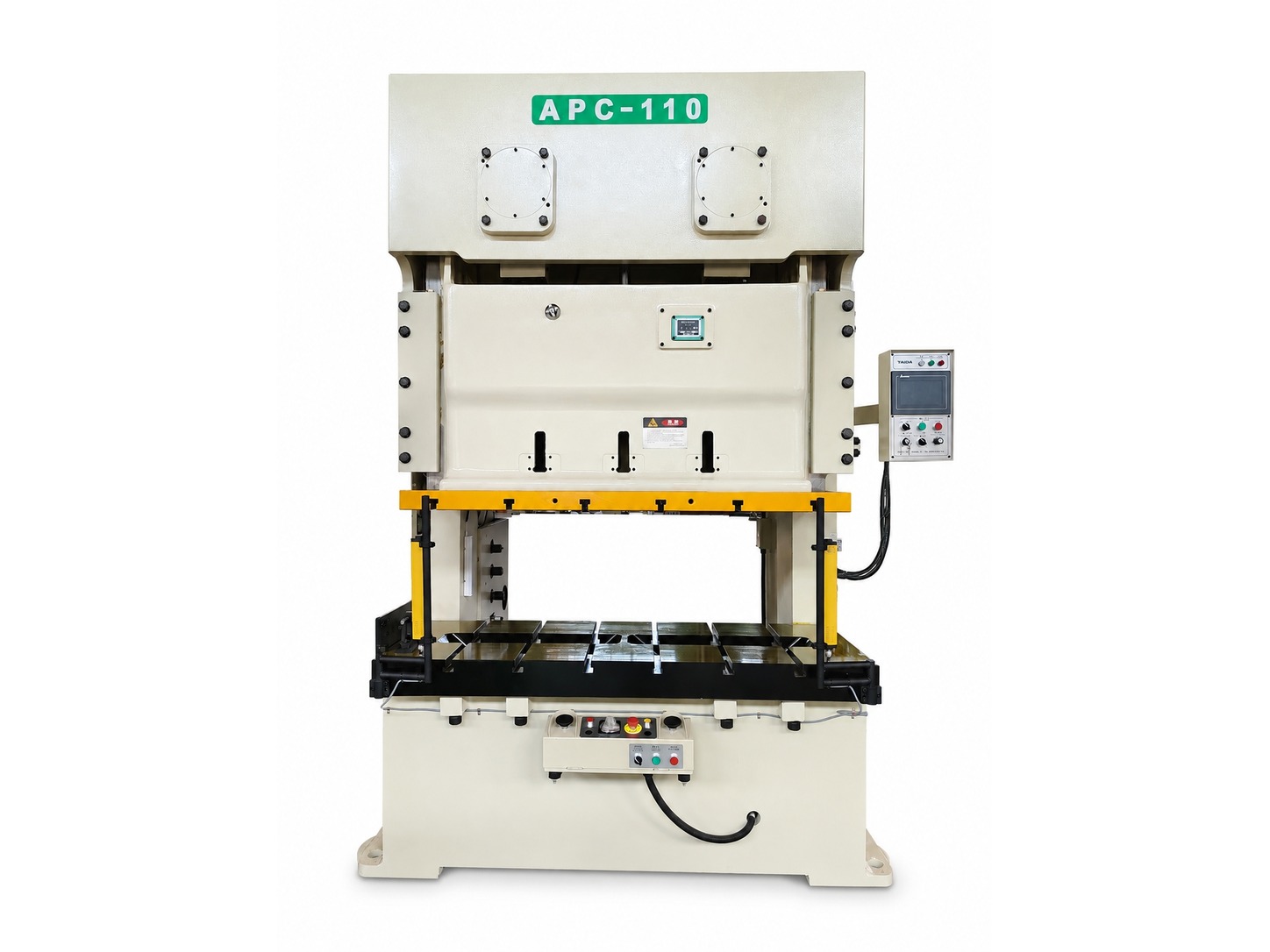
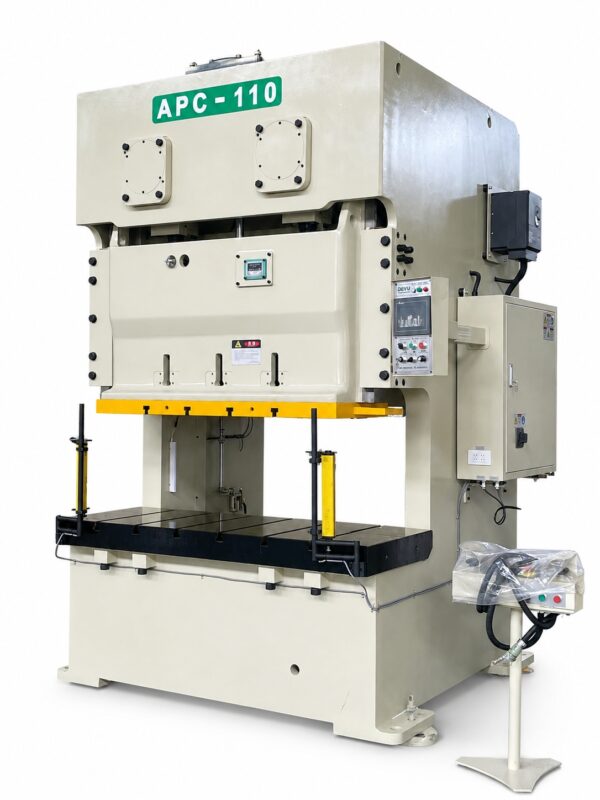
A double-crank press uses a two-point drive arrangement to support and move a wider slide. This design provides a longer working area than a conventional single-crank press.
DEYU’s APC Series C-frame double-crank presses are available from 110 to 315 tons.
Operation
The two-point drive helps distribute force across a broader working area. It also provides better slide support when several stamping positions are arranged along a wide die.
“Double-crank press,” “double-point press” and “two-point mechanical press” are sometimes used for similar configurations. The exact transmission structure should still be confirmed with the manufacturer.
Applications
Double-crank presses are commonly used for:
- Wide workpieces and dies
- Multi-station stamping
- Wide progressive dies
- Automotive and appliance components
- Operations with distributed stamping loads
Advantages
- Wider slide and bolster dimensions
- More balanced force distribution
- Better support across wide dies
- Suitable for multi-position tooling
- Compatible with automatic feeding systems
Limitations
A double-crank press generally requires more installation space and may involve a higher investment than a comparable single-crank machine. It must also operate within the manufacturer’s permitted load and off-centre loading limits.
Main Differences
| Comparison | Single-Crank Press | Double-Crank Press |
|---|---|---|
| Drive | Single-point drive | Two-point drive |
| Working area | Relatively compact | Wider |
| Suitable dies | Small and medium-sized dies | Medium, large and wide dies |
| Load distribution | Best for centred loads | Better for loads distributed across a wide die |
| DEYU Series | APA | APC |
Which One Should You Choose?
A single-crank press is generally suitable when the die is compact and the stamping load is positioned close to the slide centre.
A double-crank press is more suitable when the die is wide, several operations are distributed across the tooling, or a longer slide and bolster are required.
Tonnage alone is not enough. Before selecting a stamping press, buyers should also consider:
- Part and die dimensions
- Material type and thickness
- Required stroke and speed
- Load distribution
- Slide and bolster size
- Feeding and automation requirements
For a reliable recommendation, provide the part drawing, material information and die dimensions to the press manufacturer.
Whether you need a single-crank or double-crank press, DEYU offers APA single-crank and APC double-crank C-frame presses with cost-effective solutions for different metal-stamping applications.Feel free to contuct us to discuss your production requirements and select a suitable press configuration.